Senior Audiologist • 4/25/2026

Choosing the right hearing aid can feel overwhelming, especially when you’re deciding between digital and analog hearing aids. Both technologies aim to improve hearing, but they work very differently and offer distinct advantages.
In this guide, we’ll break down everything you need to know so you can confidently choose the best option for your needs.
| Brand | Model | Type | One Ear | Pair |
|---|---|---|---|---|
| Signia | Pure Charge&Go IX 7IX | Rechargeable RIC | ₹3,49,990* | ₹6,99,980* |
| Pure Charge&Go IX 5IX | Rechargeable RIC | ₹2,49,990* | ₹4,99,980* | |
| Pure Charge&Go IX 3IX | Rechargeable RIC | ₹1,79,990* | ₹3,59,980* | |
| Motion Charge&Go IX | Rechargeable BTE | ₹1,79,990* | ₹3,59,980* | |
| Silk Charge&Go IX | Invisible Rechargeable | ₹1,59,990* | ₹3,19,980* | |
| Phonak | Audéo Sphere Infinio 90 | AI Rechargeable RIC | ₹4,56,500 | ₹8,75,000 |
| Audéo Infinio R90 | Rechargeable RIC | ₹3,56,000 | ₹6,70,000 | |
| Audéo Infinio R70 | Rechargeable RIC | ₹2,43,000 | ₹4,44,000 | |
| Audéo Infinio R50 | Rechargeable RIC | ₹1,49,000 | ₹2,56,000 | |
| Audéo Infinio R30 | Rechargeable RIC | ₹89,000 | ₹1,54,000 | |
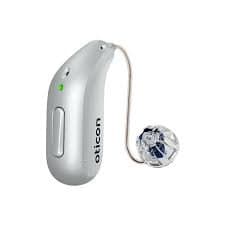
| Oticon | Intent 1 miniRITE R | Rechargeable AI | ₹4,25,000 | ₹8,50,000 |
| Intent 2 miniRITE R | Rechargeable AI | ₹3,90,000 | ₹7,80,000 | |
| Real 1 miniRITE R | Rechargeable | ₹3,50,000 | ₹7,00,000 | |
| Real 2 miniRITE R | Rechargeable | ₹2,80,000 | ₹5,60,000 | |
| More 1 miniRITE R | Rechargeable | ₹1,90,000 | ₹3,80,000 | |
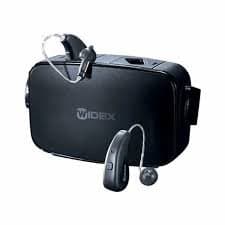
| Widex | Allure 440 RIC | Rechargeable AI | ₹4,80,000 | ₹9,60,000 |
| Allure 330 RIC | Rechargeable AI | ₹2,90,000 | ₹5,80,000 | |
| Moment Sheer 440 | Rechargeable | ₹3,90,000 | ₹7,80,000 | |
| Moment Sheer 330 | Rechargeable | ₹2,45,000 | ₹4,90,000 | |
| Moment 220 | Rechargeable | ₹1,65,000 | ₹3,30,000 | |
| Starkey | Genesis AI 24 RIC RT | AI Rechargeable | ₹3,90,000 | ₹7,80,000 |
| Genesis AI 20 RIC RT | AI Rechargeable | ₹2,70,000 | ₹5,40,000 | |
| Genesis AI 16 RIC RT | Rechargeable | ₹1,90,000 | ₹3,80,000 | |
| Genesis AI 12 RIC RT | Rechargeable | ₹1,20,000 | ₹2,40,000 | |
| ReSound | Vivia 9 MicroRIE | Rechargeable AI | ₹4,55,495 | ₹8,89,995 |
| Vivia 7 MicroRIE | Rechargeable AI | ₹2,64,495 | ₹5,07,995 | |
| Vivia 5 MicroRIE | Rechargeable AI | ₹1,55,495 | ₹2,89,995 | |
| Vivia 4 MicroRIE | Rechargeable AI | ₹97,495 | ₹1,73,995 |
| Brand | Model | Type | One Ear | Pair |
|---|---|---|---|---|
| Siemens (Legacy) | Lotus Analog BTE | BTE | ₹12,000 | ₹24,000 |
| Axon | Analog BTE | BTE | ₹9,500 | ₹19,000 |
| Arphi | Analog BTE | BTE | ₹8,500 | ₹17,000 |
| Rexton (Older Models) | Analog BTE | BTE | ₹14,000 | ₹28,000 |
| Local Indian Brands | Pocket Analog | ₹2,500 | ₹5,000 | |
| Local Indian Brands | Basic Analog BTE | BTE | ₹6,000 | ₹12,000 |
| Local Indian Brands | Premium Analog BTE | BTE | ₹15,000 | ₹30,000 |
| Feature | Digital Hearing Aids | Analog Hearing Aids |
|---|---|---|
| Price Range | ₹25,000 – ₹4,56,500 | ₹2,500 – ₹15,000 |
| Pair Price | ₹50,000 – ₹8,89,995 | ₹5,000 – ₹30,000 |
| Bluetooth | ✅ Yes | ❌ No |
| Rechargeable | ✅ Yes | ❌ No |
| AI Features | ✅ Available | ❌ No |
| Noise Reduction | ✅ Advanced | ❌ Basic Amplification |
| Speech Enhancement | ✅ Excellent | ❌ Limited |
| Best For | All hearing loss levels | Mild hearing loss & budget users |
Analog hearing aids are the traditional type of hearing devices. They work by amplifying all sounds in the environment equally—whether it’s speech, background noise, or sudden loud sounds.
While analog hearing aids are more affordable, they lack advanced sound processing, making them less effective in noisy environments.
Digital hearing aids are modern, high-tech devices that convert sound into digital signals and process them intelligently before delivering them to your ears.
These devices are designed to provide clearer, more natural sound, especially in complex listening environments.
| Feature | Digital Hearing Aids | Analog Hearing Aids |
|---|---|---|
| Sound Processing | Advanced digital signal processing | Basic amplification |
| Sound Quality | Clear and natural | Less refined |
| Noise Reduction | Yes (smart filtering) | No |
| Customization | Highly customizable | Limited |
| Connectivity | Bluetooth, smartphone apps | No connectivity |
| Cost | Higher | Lower |
| Best For | Moderate to severe hearing loss | Mild hearing loss or budget users |
Digital hearing aids are rapidly becoming the preferred choice due to their advanced capabilities.
Despite being older technology, analog hearing aids still have some benefits.
The right choice depends on your lifestyle, hearing needs, and budget.
For most users today, digital hearing aids are the better choice due to their superior sound quality and smart features. While they may cost more initially, they provide a much better hearing experience and long-term value.

Yes, digital hearing aids offer better sound clarity, noise reduction, and customization, making them more effective in real-world environments.
Analog devices use simpler technology, which reduces manufacturing costs but also limits features.
No, analog hearing aids cannot be upgraded. You would need to purchase a digital device.
Digital hearing aids are ideal because they filter background noise and enhance speech.
Yes, especially if you want better comfort, clarity, and advanced features for daily use.
When comparing digital hearing aids vs analog, the difference comes down to technology and performance. Analog devices may work for basic needs, but digital hearing aids deliver a modern, intelligent, and highly personalized hearing experience.
If you’re serious about improving your hearing quality, investing in digital technology is the smarter choice.