Oticon
OTICON TEGO D Behind-The-Ear (BTE) Hearing Aid
₹25,000MRP
Technology
AI-PoweredNoise CancellationTinnitus Masking
Style
BTE
Available Colors
BlackBrownGreySilverBeigeDark ChampagnePearl WhiteSnow WhiteSandy Brown
Suitable For
Mild Hearing LossModerate Hearing LossSevere Hearing Loss
✅ Free 3-day home trial·🚚 Cash on delivery·🛡️ Genuine warranty
The Oticon Tego D Behind-The-Ear (BTE) Hearing Aid is a traditional behind-the-ear hearing solution designed to provide clear, comfortable and personalized amplification for people experiencing hearing loss. As part of Oticon's Tego hearing-aid family, the Tego D is designed around the principle of providing useful access to speech and everyday sounds while offering the reliability and practical handling associated with a BTE hearing-aid format.
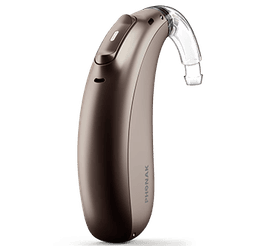
Unlike an In-The-Canal or Completely-In-Canal hearing aid, the Tego D BTE has its main electronic housing positioned behind the ear. Sound is delivered from the hearing-aid body to the ear through a tube and an appropriately selected ear coupling, such as an earmold or ear tip. This configuration allows the hearing aid to accommodate components and amplification requirements that may not be practical in very small custom hearing aids.
The Oticon Tego D belongs to an older generation of hearing-aid technology. Exact specifications, available configurations, controls, battery size and programming capabilities can vary according to the particular Tego D unit. Therefore, the actual device should be checked before making model-specific technical claims.
Behind-The-Ear Design
The defining feature of the Oticon Tego D is its Behind-The-Ear (BTE) configuration.
The main hearing-aid housing rests comfortably behind the user's ear. Sound is then transmitted through a thin acoustic tube connected to an earmold or other appropriate coupling inside the ear.
The BTE design has been widely used because it provides space for amplification components while keeping the majority of the electronics outside the ear canal.
This design can be especially useful for people who require a higher level of amplification or who prefer a traditional hearing-aid format that is relatively straightforward to handle.
Personalized Hearing Amplification
The Tego D is designed to provide amplification based on the user's individual hearing loss.
Hearing loss varies significantly from one person to another. Some individuals have difficulty primarily with high-frequency sounds, while others have hearing loss affecting a broader range of frequencies.
The hearing aid is therefore professionally programmed according to the user's audiogram.
The purpose of programming is not simply to make all sounds louder. Instead, the audiologist adjusts amplification so that important speech and environmental sounds become more accessible while maintaining comfortable listening.
Speech Understanding
Improving access to speech is one of the most important objectives of hearing-aid fitting.
People with hearing loss may have difficulty understanding conversations even when they can hear that someone is speaking. Speech may sound unclear, distant or incomplete.
The Tego D provides amplified sound according to the user's programmed hearing profile. With appropriate fitting, this can help improve access to speech during everyday conversations.
The level of benefit varies according to the degree and type of hearing loss, speech recognition ability, listening environment and individual adaptation.
A hearing aid cannot restore normal hearing, but appropriate amplification can help a user make better use of the hearing ability that remains.
Traditional BTE Configuration
The traditional BTE design offers several practical advantages.
Because the main electronics are positioned behind the ear, the device can accommodate components needed for amplification without placing the complete system inside the ear canal.
This can make the BTE style easier to handle for some users, particularly people who have difficulty manipulating very small in-the-ear hearing aids.
The external design also makes certain maintenance tasks easier because the main hearing-aid body remains accessible.
Ear Coupling and Earmold
The sound produced by the hearing aid is delivered to the ear through an acoustic tube and an appropriate ear coupling.
Depending on the user's hearing loss and ear anatomy, an earmold may be selected to provide the required acoustic connection.
The earmold can be custom-made according to an impression of the ear, helping provide a secure and personalized fit.
The choice of coupling is important because it affects comfort, sound delivery, acoustic sealing and the overall hearing-aid fitting.
An audiologist should determine the appropriate earmold or coupling based on the user's hearing requirements.
Suitable for Different Degrees of Hearing Loss
One of the major advantages of traditional BTE hearing aids is their ability to accommodate a broad range of hearing-loss requirements.
The Tego D may be considered when a user requires more amplification than can conveniently be provided by very small custom hearing aids.
However, the actual suitability depends on the specifications of the particular Tego D version and the patient's current audiogram.
The audiologist should consider:
Degree of hearing loss
Frequency configuration
Speech recognition
Required amplification
Maximum output
Ear anatomy
Listening requirements
Previous hearing-aid experience
For very severe or profound hearing loss, a dedicated high-power BTE may be required instead.
Comfortable Wearing Experience
The Tego D is designed to sit behind the ear while the earmold or coupling rests in the ear.
Because the main electronics do not occupy the ear canal, some users may find the BTE configuration comfortable for extended periods.
Comfort depends on the physical fit of the earmold, tubing, ear anatomy and individual sensitivity.
A properly fitted earmold should sit securely without causing persistent pain or excessive pressure.
If discomfort occurs, the user should have the earmold or fitting checked by a hearing-care professional.
Easy Handling
Traditional BTE hearing aids can be easier for some users to handle compared with extremely small custom devices.
The larger behind-the-ear housing provides a more substantial surface area for handling the device during insertion and removal.
This can be particularly useful for older adults or people who have difficulty manipulating small objects.
The audiologist or hearing-care professional should demonstrate the correct method of placing and removing the hearing aid.
Everyday Communication
The Oticon Tego D can be used to provide amplification in a variety of everyday situations.
These may include:
One-to-one conversations
Family communication
Conversations with friends
Watching television
Listening at home
Shopping
Routine outdoor activities
Speaking with colleagues
Familiar social situations
The hearing aid is intended to improve access to sound, but the listening environment continues to influence performance.
Users may achieve better communication when they face the speaker, reduce background noise and maintain a reasonable distance from the person speaking.
Listening in Quiet Environments
Many hearing-aid users experience difficulty hearing soft speech even in quiet environments.
In a quiet room, the Tego D can provide amplification according to the user's hearing profile.
This may help users access conversations with family members, caregivers and other people at home.
The audiologist can fine-tune the hearing aid if the user reports that speech is too soft, too loud or unclear.
Listening in Background Noise
Background noise is one of the most challenging environments for people with hearing loss.
Busy markets, restaurants, family gatherings and public areas can contain many competing sounds.
A hearing aid can provide useful amplification, but it cannot completely remove all background noise.
Users should maintain realistic expectations and use communication strategies such as moving closer to the speaker, facing the speaker directly and selecting quieter locations where possible.
Professional counselling can help users understand how to achieve better communication in difficult environments.
Television Listening
Television dialogue can become difficult to understand when hearing loss affects speech frequencies.
The Tego D can provide amplified access to television sound.
However, the listening experience depends on the television's speaker quality, room acoustics, distance from the television and the user's hearing loss.
If television remains difficult to understand, the hearing professional can assess the hearing-aid programming and discuss additional listening strategies.
Telephone Conversations
Telephone communication can be challenging because the listener cannot see facial expressions or lip movements.
The Tego D may provide useful amplification for telephone speech depending on the device configuration and telephone being used.
The hearing professional can demonstrate appropriate telephone positioning and discuss strategies for improving telephone communication.
Users who frequently use a telephone should mention this during the hearing-aid fitting appointment.
Professional Audiological Fitting
A professional fitting is essential for achieving the best possible result from a hearing aid.
Before fitting the Tego D, the audiologist should perform or review a current hearing assessment.
The fitting process can include:
Reviewing the audiogram.
Determining appropriate amplification.
Selecting suitable tubing and earmold configuration.
Programming the hearing aid.
Checking sound comfort.
Assessing speech audibility.
Checking physical fit.
Demonstrating operation.
Explaining maintenance.
Scheduling follow-up adjustments.
A follow-up visit may be required after the user has worn the hearing aid in everyday situations.
Personalized Fine-Tuning
Hearing-aid fitting is often an ongoing process.
A user may initially report that some sounds are too loud or that speech is still difficult to understand.
The audiologist can make appropriate adjustments based on the user's feedback and hearing test results.
Fine-tuning may involve changes to amplification or other available settings depending on the capabilities of the specific Tego D device.
Regular follow-up can help ensure that the hearing aid remains comfortable and useful.
Hearing Aid Adaptation
People who have not used hearing aids before may require an adjustment period.
After a long period of hearing loss, the brain may not be accustomed to hearing amplified environmental sounds.
Sounds such as footsteps, dishes, paper, fans, traffic and household appliances can initially seem more noticeable.
Gradual adaptation can help users become accustomed to these sounds.
If amplification remains uncomfortable, the hearing aid should be professionally adjusted rather than simply abandoned.
Custom Earmold
An earmold can play an important role in the performance of a BTE hearing aid.
The earmold provides the acoustic connection between the hearing aid and the ear. Its design is selected according to the user's hearing loss, ear anatomy and comfort requirements.
An appropriately fitted earmold can provide:
Secure positioning
Comfortable wearing
Appropriate sound delivery
Suitable acoustic sealing
Better retention during everyday activities
If the earmold becomes loose, damaged or uncomfortable, it may need professional adjustment or replacement.
Maintenance and Cleaning
Regular maintenance is essential for reliable hearing-aid operation.
The user should keep the hearing aid and earmold clean and should regularly inspect the tubing and sound outlet.
Common causes of reduced sound output can include:
Blocked tubing
Moisture
Earwax
Damaged tubing
Battery problems
Physical damage
If the device becomes quieter or stops working, the user should check the battery and accessible tubing before seeking professional assistance.
The hearing aid should not be exposed to excessive moisture, water, heat or chemicals unless the particular device documentation specifically allows it.
Tubing Maintenance
Traditional BTE hearing aids use acoustic tubing to deliver sound from the hearing-aid body to the ear.
Over time, tubing can become stiff, blocked, discoloured or damaged.
Old tubing may affect sound delivery and comfort.
Regular inspection and professional tubing replacement can help maintain appropriate performance.
Users should not attempt complex tubing replacement themselves unless they have been specifically trained to do so.
Battery Operation
The exact battery configuration of an Oticon Tego D device should be confirmed from the specific unit.
Battery life depends on factors such as:
Battery type
Daily wearing time
Amplification level
Device configuration
Individual usage
Users should follow the recommended battery type and replacement procedure for their particular device.
Batteries should always be stored safely and kept away from children and pets.
Earwax and Hearing-Aid Performance
Earwax can affect the performance of any hearing aid that uses an earmold or ear coupling.
A blocked sound outlet can reduce the amount of sound reaching the ear.
If the Tego D suddenly becomes quieter, the user should check the earmold, tubing and other accessible components.
Users should never insert sharp objects into the hearing-aid tubing or sound outlet.
Professional cleaning should be arranged when necessary.
Benefits of the Oticon Tego D BTE
The traditional BTE design offers several practical benefits:
Behind-the-ear configuration
Accessible and easy-to-handle housing
Suitable for a range of hearing-loss levels
Professional programming
Customizable ear coupling
Potentially suitable for users requiring stronger amplification
Straightforward maintenance
Suitable for everyday speech amplification
Comfortable wearing when properly fitted
Established traditional hearing-aid format
Who May Consider the Oticon Tego D?
The Tego D BTE may be considered by adults who:
Have hearing loss requiring amplification.
Prefer a traditional behind-the-ear hearing aid.
Want a device that is relatively easy to handle.
Require more amplification than a very small custom device may provide.
Prefer an earmold-based fitting.
Want a practical hearing-aid design for everyday use.
Have hearing loss within the output capability of the specific Tego D configuration.
A current hearing test should be completed before selecting the device.
Importance of a Current Audiogram
Hearing levels can change over time.
For this reason, an old audiogram should not automatically be used to determine whether an older hearing aid remains appropriate.
A current hearing evaluation allows the audiologist to determine whether the Tego D provides sufficient amplification and whether the earmold and fitting remain appropriate.
The audiologist can also assess speech understanding and determine whether any additional medical or hearing-care evaluation is necessary.
Hearing Aid Counselling
Successful hearing-aid use involves more than purchasing the device.
The user should receive appropriate counselling regarding:
How to insert and remove the hearing aid
How to replace the battery
How to clean the earmold
How to care for the tubing
How to identify common problems
How to adapt to amplified sound
How to communicate in background noise
When to schedule follow-up appointments
Proper counselling can help users develop realistic expectations and use the hearing aid more effectively.
Important Considerations for an Older Oticon Model
The Oticon Tego D is an older-generation hearing-aid model. Therefore, anyone purchasing or servicing one should verify the exact model and condition of the individual device.
Before purchase, it is advisable to check:
Exact model designation
Physical condition
Working condition
Battery configuration
Programming compatibility
Tubing condition
Earmold condition
Availability of replacement components
Availability of technical support
Suitability for the user's current audiogram
Availability of service and components may differ from that of newer Oticon hearing aids.
Professional Hearing Evaluation
The correct hearing aid depends on the individual's hearing loss and communication requirements.
Before recommending the Tego D, a hearing professional should consider:
Pure-tone thresholds
Speech recognition
Type of hearing loss
Degree of hearing loss
Hearing-aid experience
Listening environments
Physical ear anatomy
Required amplification
Comfort preferences
A professional fitting can help determine whether the Tego D is appropriate or whether a newer hearing-aid platform would provide a better match.
Key Features at a Glance
Feature Description
Brand Oticon
Model Tego D
Hearing Aid Style Behind-The-Ear (BTE)
Design Traditional behind-the-ear configuration
Ear Coupling Tubing with appropriate earmold/ear coupling
Amplification Professionally programmed according to hearing loss
Fitting Audiologist-based fitting
Primary Purpose Speech and environmental sound amplification
Wearing Position Behind the ear
Earmold Configuration-dependent
Battery Verify according to specific unit
Technology Generation Older Oticon Tego family
Suitability Determined by current audiogram and device capability
Conclusion
The Oticon Tego D Behind-The-Ear (BTE) Hearing Aid is a traditional hearing solution designed to provide personalized amplification for people with hearing loss. Its behind-the-ear configuration places the main electronic housing behind the ear and delivers sound through tubing and an appropriate ear coupling.
The BTE format offers practical advantages including relatively easy handling, a customizable ear coupling and the ability to accommodate amplification requirements that may be difficult to achieve with very small in-the-ear devices.
The Tego D can be considered for users who prefer a traditional hearing-aid style or require a level of amplification suited to a BTE configuration. However, the exact suitability depends on the individual's current hearing loss and the specifications of the particular Tego D unit.
Because the Oticon Tego D is an older-generation product, exact technical specifications, battery configuration, programming compatibility and availability of replacement components should be verified for the individual device before purchase.
A current hearing test and professional audiological fitting are recommended. With an appropriate fit, regular maintenance and proper follow-up, the Oticon Tego D can provide useful amplification and improved access to speech and everyday environmental sounds for suitable users.
More Oticon Hearing Aids
OTICON GO PRO D VC / GO PRO D Behind-The-Ear (BTE) Hearing Aid
OTICON GO PRO POWER D Behind-The-Ear (BTE) Hearing Aid
OTICON GO PRO D In-The-Canal (ITC) Hearing Aid
OTICON GO PRO In-The-Canal (ITC) Hearing Aid
OTICON GO PRO PB Completely-In-Canal (CIC) Hearing Aid
OTICON GO PRO PB POWER Behind-The-Ear (BTE) Hearing Aid
OTICON GO PRO D VC / GO PRO D Behind-The-Ear (BTE) Hearing Aid
OTICON GO PRO POWER D Behind-The-Ear (BTE) Hearing Aid
OTICON GO PRO D In-The-Canal (ITC) Hearing Aid
OTICON GO PRO In-The-Canal (ITC) Hearing Aid
OTICON GO PRO PB Completely-In-Canal (CIC) Hearing Aid
OTICON GO PRO PB POWER Behind-The-Ear (BTE) Hearing Aid
Frequently Asked Questions
What is a Oticon hearing aid?▼
Oticon is a world-leading hearing aid brand known for its advanced technology, exceptional sound quality, and reliability. The OTICON TEGO D Behind-The-Ear (BTE) Hearing Aid is one of their premium models designed to help people with hearing loss experience clear, natural sound.
What technology does the OTICON TEGO D Behind-The-Ear (BTE) Hearing Aid use?▼
The OTICON TEGO D Behind-The-Ear (BTE) Hearing Aid features AI-Powered, Noise Cancellation, Tinnitus Masking. These technologies work together to deliver outstanding clarity, comfort, and connectivity for the wearer.
What is the style and shape of the OTICON TEGO D Behind-The-Ear (BTE) Hearing Aid?▼
The OTICON TEGO D Behind-The-Ear (BTE) Hearing Aid is available in BTE style(s). This style balances comfort, discretion, and performance.
What level of hearing loss is the OTICON TEGO D Behind-The-Ear (BTE) Hearing Aid suitable for?▼
The OTICON TEGO D Behind-The-Ear (BTE) Hearing Aid is recommended for individuals with Mild Hearing Loss, Moderate Hearing Loss, Severe Hearing Loss. We advise getting a professional hearing assessment to confirm the best solution for your specific needs.
What is the price of the OTICON TEGO D Behind-The-Ear (BTE) Hearing Aid?▼
The OTICON TEGO D Behind-The-Ear (BTE) Hearing Aid is priced at ₹25,000. Insono Hearing offers flexible EMI options and financing. Contact us for the latest offers and to schedule a free trial.
Where can I get a free trial of the OTICON TEGO D Behind-The-Ear (BTE) Hearing Aid in India?▼
Insono Hearing offers free trials for the OTICON TEGO D Behind-The-Ear (BTE) Hearing Aid at our clinics. Book an appointment online or call us to experience the device before making a decision.
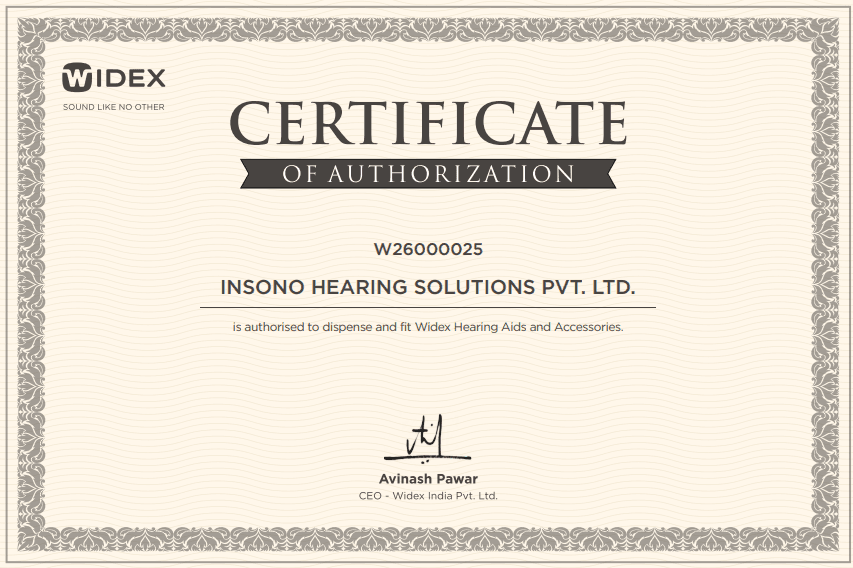
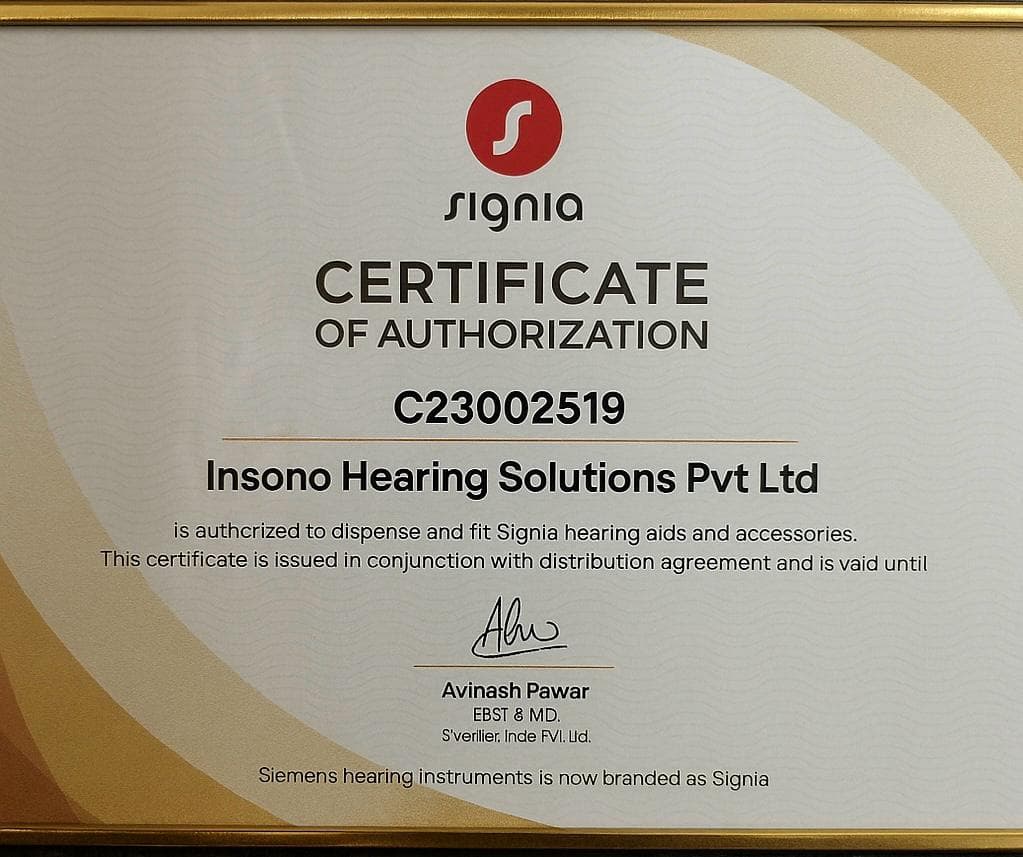
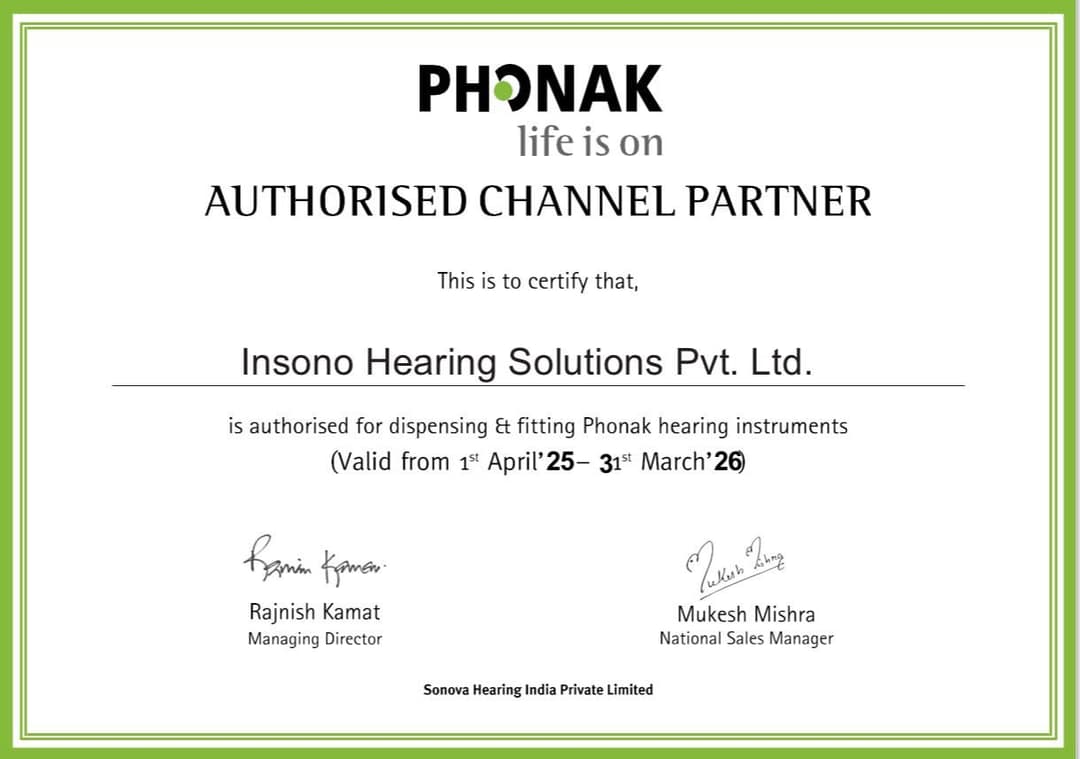
Official Certifications from Widex, Signia & Phonak
Insono Hearing Solutions is an authorized partner for leading global hearing aid brands including Widex, Signia, Phonak, and Oticon. These certifications reflect our trusted expertise and commitment to world-class hearing care in India.
Discover the Different Types of Hearing Aids for Better Hearing
Learn about the latest digital hearing aids, from behind-the-ear (BTE) to completely-in-canal (CIC) devices. Find the right style, features, and comfort level that suit your lifestyle.