Oticon
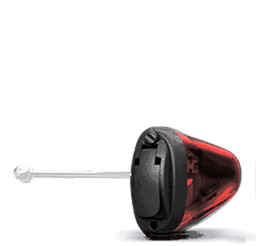
OTICON RIA POWER Completely-In-Canal (CIC)Hearing Aid
₹45,000MRP
Technology
AI-PoweredNoise CancellationTinnitus Masking
Style
CIC
Available Colors
BlackSandy BrownBrownGreyBeigeDark ChampagneBlack GlossDeep Brown
Suitable For
Mild Hearing LossModerate Hearing LossSevere Hearing Loss
✅ Free 3-day home trial·🚚 Cash on delivery·🛡️ Genuine warranty
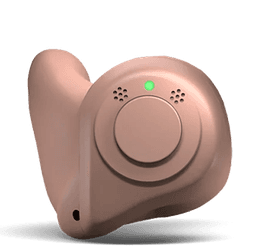
The Oticon Ria Power Completely-In-Canal (CIC) Hearing Aid is a custom-made digital hearing solution designed for people who need additional amplification while preferring a discreet hearing aid that sits inside the ear canal. Its CIC design makes the device considerably less visible than traditional behind-the-ear hearing aids, making it suitable for users who value both hearing support and a subtle appearance.
The Oticon Ria Power is part of the Ria family of hearing aids and is designed to provide personalized amplification according to the user's individual hearing loss. It incorporates digital sound processing and features intended to support speech audibility, listening comfort, feedback management and adaptation to different everyday listening environments.
The Power configuration is intended for users who require more amplification than conventional lower-powered custom hearing aids. However, the appropriate hearing-aid style and power level should always be determined from a complete hearing evaluation and professional fitting.
Completely-In-Canal Design
The most noticeable characteristic of the Oticon Ria Power is its Completely-In-Canal (CIC) design.
A CIC hearing aid is manufactured to sit almost entirely within the ear canal. Unlike a Behind-The-Ear hearing aid, there is no large casing positioned behind the ear. This provides a discreet appearance and allows users to wear hearing assistance without a prominent device being visible.
The custom shell is created according to the shape of the user's ear. An audiologist or hearing professional takes an appropriate ear impression or measurement, which is then used to manufacture the custom hearing-aid shell.
Because every ear canal is different, the final size, shape and visibility of the hearing aid can vary from person to person.
Power Amplification
The Power designation indicates that this version is intended to deliver stronger amplification than standard low-power custom hearing aids.
This makes the Oticon Ria Power potentially suitable for people with hearing losses requiring increased amplification while still wanting an in-the-ear design.
However, a higher-power hearing aid is not automatically appropriate for every person with hearing loss. The audiologist should consider the patient's pure-tone audiogram, speech understanding, hearing-loss configuration, ear anatomy and required output before selecting this type of device.
For some users with severe or profound hearing loss, a larger BTE or power BTE may provide advantages in terms of available output and feedback control.
Digital Sound Processing
The Oticon Ria platform uses digital processing to modify incoming sound before it reaches the ear.
Traditional amplification simply makes sounds louder. Modern digital hearing aids can process different frequencies and environmental sounds more selectively.
This is important because hearing loss is rarely identical across all frequencies. A person may hear low-pitched sounds relatively well but have greater difficulty hearing high-frequency speech information.
Digital processing allows the hearing professional to create a more personalized amplification response.
The result is intended to provide useful amplification while maintaining comfortable sound quality.
Multi-Channel Processing
Ria 2 family specifications identify 16 frequency channels, providing multiple areas for sound processing and fitting adjustment.
Frequency channels allow the audiologist to make more detailed adjustments across the audible frequency range.
For example, if the hearing test indicates greater hearing loss at higher frequencies than at lower frequencies, amplification can be adjusted accordingly.
This type of processing provides greater fitting flexibility than basic amplification systems.
The exact number of channels and processing capabilities can depend on the specific Ria model and configuration, so the specifications of the actual device should always be confirmed before purchase.
Personalized Hearing-Aid Fitting
No two people experience hearing loss in exactly the same way.
Even people with similar hearing-test results may have different communication requirements. One person may primarily struggle with conversations in restaurants, while another may have difficulty hearing family members at home.
The Oticon Ria platform is designed for professional programming and personalization.
During the fitting process, the audiologist can consider:
Degree of hearing loss
Frequency-specific hearing thresholds
Speech understanding
Listening environments
Previous hearing-aid experience
Sound preferences
Comfort levels
Feedback sensitivity
Lifestyle requirements
The hearing aid can then be adjusted to provide an appropriate balance between audibility and comfort.
Speech Understanding
One of the main reasons people choose hearing aids is difficulty understanding speech.
The Oticon Ria Power is designed to provide amplification that makes speech sounds more accessible.
In quiet environments, appropriate amplification can help users hear conversations more clearly.
In environments with background noise, digital processing and noise-management features can help manage competing sounds.
However, hearing aids cannot completely eliminate the difficulties associated with severe background noise. Speech understanding also depends on the user's hearing ability, speech discrimination, distance from the speaker and acoustic environment.
Noise Management
Background noise can make communication difficult for people with hearing loss.
Common challenging environments include:
Restaurants
Markets
Weddings
Family gatherings
Offices
Public transport
Busy streets
Social events
The Ria platform includes processing designed to manage unwanted environmental noise.
The purpose of noise management is not to remove every background sound. Environmental awareness remains important. Instead, the hearing aid processes unwanted sound to make the overall listening experience more manageable.
The effectiveness of noise management depends on the user's hearing loss and the complexity of the surrounding environment.
Directional Sound Processing
Directional processing can be helpful when the user is trying to listen to a speaker while competing sounds are coming from other directions.
When appropriately configured, directional technology can help the hearing aid focus more strongly on relevant sound sources.
This can be useful during face-to-face conversations, particularly when the speaker is positioned in front of the wearer.
Users can also improve speech understanding by reducing background noise, sitting closer to the speaker and maintaining visual contact.
Feedback Management
Feedback is the high-pitched whistling sound that can sometimes occur with hearing aids.
It happens when amplified sound leaks from the ear and is picked up again by the hearing-aid microphone.
Feedback can be particularly important in power hearing aids because greater amplification can increase the possibility of acoustic feedback.
The Ria platform includes feedback-management technology designed to control unwanted feedback while allowing appropriate amplification.
The physical fit of the custom shell is equally important. If the hearing aid does not fit correctly, feedback may occur even when digital feedback management is functioning properly.
Automatic Sound Adjustment
People encounter different acoustic environments throughout the day.
The sound environment inside a home is very different from a busy shopping centre or a restaurant.
Automatic processing allows the hearing aid to adjust its sound processing according to changes in the acoustic environment.
This reduces the need for the user to manually change settings throughout the day.
For users who prefer simple operation, automatic processing can make everyday hearing-aid use more convenient.
Binaural Hearing Support
When hearing loss affects both ears, hearing professionals may recommend two hearing aids.
The Ria platform supports binaural coordination in compatible configurations. This allows certain functions of the left and right hearing aids to work together.
Using two appropriately fitted hearing aids can provide more balanced access to sound for people with hearing loss in both ears.
Whether one or two hearing aids are appropriate depends on the individual's hearing evaluation.
Discreet Appearance
The CIC format is one of the most discreet hearing-aid styles available.
Because the hearing aid sits inside the ear canal, very little of the device may be visible from the outside.
This can be particularly useful for users who are concerned about the appearance of hearing aids.
The exact visibility depends on the size of the ear canal and the amount of space required for the electronics and amplification components.
Some ears can accommodate very small CIC devices, while others may require a slightly larger custom shell.
Custom Ear-Mould Construction
Unlike universal-fit devices, the Oticon Ria Power CIC is custom manufactured.
An accurate ear impression or digital measurement is important for creating the shell.
The custom construction can provide:
Personalized fit
Secure positioning
Discreet appearance
Improved comfort
Appropriate acoustic sealing
A proper fit also plays an important role in controlling feedback.
If the user experiences discomfort, pressure or persistent feedback, the hearing professional should examine the fit and make appropriate adjustments.
Ease of Daily Use
CIC hearing aids are small and discreet, but their small size can also make handling more challenging for some people.
Users with good finger dexterity can generally learn to insert and remove the device with practice.
However, people with arthritis, reduced hand movement or poor eyesight may find larger hearing-aid styles easier to handle.
The hearing professional should consider not only hearing requirements but also the user's ability to operate and maintain the device.
Battery Considerations
The exact battery specification depends on the particular Oticon Ria Power CIC version.
Custom CIC hearing aids generally use small disposable hearing-aid batteries because the compact design requires a small power source.
Battery life depends on:
Daily wearing time
Amplification level
Hearing-loss severity
Listening environment
Device settings
Wireless use where applicable
Battery capacity
Users should replace the battery according to the manufacturer's recommendations and keep spare batteries available when travelling or spending extended periods away from home.
Tinnitus Sound Support
Certain Ria family configurations include tinnitus-related sound-support functions.
These features can provide sounds that may be incorporated into a professional tinnitus-management program.
Tinnitus is a complex condition, and hearing aids should not be presented as a guaranteed cure.
People with persistent tinnitus should discuss their symptoms with an appropriate healthcare professional, particularly if tinnitus is sudden, one-sided or associated with other hearing or neurological symptoms.
Wireless Features
Wireless capability depends on the exact Ria Power configuration.
Compatible Oticon wireless accessories can provide additional listening options.
Depending on the specific device and accessory, users may be able to receive audio from external sources such as television or telephone systems.
Because Ria is an older product family, compatibility with current accessories and smartphones should be checked against the exact model before making a purchase.
Listening Programs
The hearing aid can be programmed according to the user's lifestyle and listening requirements.
Depending on the exact model, programs may be configured for situations such as:
Everyday listening
Quiet environments
Noisy environments
Music
Special listening situations
The audiologist can determine which programs are most useful.
Many users prefer automatic operation, while others appreciate having manually selectable listening programs.
Comfort and Adaptation
When someone begins using a hearing aid, sounds that have been missing or reduced for a long time may suddenly become noticeable.
Everyday sounds such as footsteps, kitchen utensils, fans, paper, traffic and household appliances can initially seem unusually prominent.
This is a normal part of the adaptation process for many new hearing-aid users.
The brain generally needs time to become accustomed to amplified sound.
If sounds remain excessively loud or uncomfortable, the hearing aid should be professionally adjusted rather than simply stopped.
Benefits for Everyday Communication
The Oticon Ria Power CIC can provide hearing support in many everyday situations.
It may help users communicate during:
Family conversations
One-to-one discussions
Social gatherings
Shopping
Workplace conversations
Meetings
Television viewing
Outdoor activities
Visits with friends
Everyday household communication
Better access to speech can make communication more comfortable and reduce the need for repeated conversations.
The hearing aid does not restore natural hearing, but appropriate amplification can make important sounds more accessible.
Benefits for Family Members
Hearing loss can affect family communication.
A person with hearing loss may frequently ask family members to repeat themselves, misunderstand words, increase the television volume or avoid group conversations.
A properly fitted hearing aid can support communication by providing appropriate amplification.
The discreet CIC design may also encourage some users to wear their hearing aids more consistently because the device is less noticeable.
Consistent use is important for adaptation and everyday benefit.
Maintenance and Care
Regular maintenance is essential for a CIC hearing aid.
Because the device sits directly inside the ear canal, earwax and moisture can affect its performance.
Users should:
Keep the hearing aid clean
Follow professional cleaning instructions
Keep the sound outlet clear
Replace batteries when necessary
Avoid exposing the hearing aid to water
Protect it from excessive heat
Store it appropriately when not in use
Schedule professional servicing when required
Sharp objects should not be inserted into the hearing aid because they can damage sensitive components.
Professional Fitting Process
The fitting process normally involves several stages.
1. Hearing Assessment
The audiologist evaluates hearing thresholds and speech understanding.
2. Hearing-Aid Selection
The hearing professional determines whether a CIC Power model is suitable.
3. Ear Impression
An accurate impression or digital scan is obtained for custom manufacturing.
4. Programming
The hearing aid is programmed according to the user's hearing test.
5. Initial Fitting
The audiologist checks comfort, sound quality and amplification.
6. Fine-Tuning
Adjustments can be made after the user has experienced the hearing aid in everyday situations.
7. Follow-Up
Regular follow-up allows the hearing professional to address changes in hearing, comfort or listening requirements.
Who May Consider the Oticon Ria Power CIC?
This hearing aid may be considered by users who:
Have hearing loss requiring increased amplification
Prefer a discreet hearing-aid style
Want a custom-made hearing aid
Prefer an in-the-ear device
Want digital sound processing
Need personalized amplification
Want feedback-management technology
Prefer minimal visibility
Have sufficient dexterity to handle a small device
The final recommendation should always be based on the individual's hearing evaluation.
When Another Style May Be More Appropriate
Although CIC hearing aids offer significant advantages in discretion, they are not suitable for every user.
A larger BTE or power BTE may be more appropriate for someone who:
Requires very high amplification
Has a very narrow ear canal
Experiences significant feedback
Has difficulty handling small devices
Has poor eyesight
Has reduced finger dexterity
Requires larger controls or a larger battery
The audiologist can compare available hearing-aid styles and recommend the most appropriate option.
Key Features at a Glance
Feature Oticon Ria Power CIC
Brand Oticon
Product Family Ria
Style Completely-In-Canal
Construction Custom-made
Technology Digital
Power Level Power
Digital Processing Multi-channel
Ria 2 Family Channels 16
Feedback Management Yes
Noise Management Yes
Directional Processing Available depending on configuration
Personalization Professional fitting
Binaural Coordination Supported on compatible configurations
Tinnitus Support Available on supported configurations
Wireless Configuration dependent
Programs Configuration dependent
Battery Configuration dependent
Fitting Professional audiological fitting
Final Conclusion
The Oticon Ria Power Completely-In-Canal (CIC) Hearing Aid is designed for people who want a combination of discreet design, custom fitting and stronger amplification. Its placement inside the ear canal makes it considerably less visible than conventional behind-the-ear hearing aids, while its Power configuration is intended for users who require more amplification than standard low-powered custom devices.
The Ria platform provides digital sound processing with features designed to support speech audibility, environmental sound management, feedback control and personalized hearing. Depending on the exact Ria configuration, additional features such as wireless connectivity, tinnitus sound support and binaural coordination may also be available.
The most important factor in achieving good hearing-aid results is not simply the device itself. Accurate hearing assessment, appropriate model selection, precise programming, correct physical fit and regular follow-up all contribute significantly to the user's experience.
For someone seeking a discreet custom hearing solution and whose hearing loss is appropriate for the available power range, the Oticon Ria Power CIC can be a practical option for supporting everyday communication and making speech and environmental sounds more accessible.
More Oticon Hearing Aids
OTICON GO PRO D VC / GO PRO D Behind-The-Ear (BTE) Hearing Aid
OTICON GO PRO POWER D Behind-The-Ear (BTE) Hearing Aid
OTICON GO PRO D In-The-Canal (ITC) Hearing Aid
OTICON GO PRO In-The-Canal (ITC) Hearing Aid
OTICON GO PRO PB Completely-In-Canal (CIC) Hearing Aid
OTICON GO PRO PB POWER Behind-The-Ear (BTE) Hearing Aid
OTICON GO PRO D VC / GO PRO D Behind-The-Ear (BTE) Hearing Aid
OTICON GO PRO POWER D Behind-The-Ear (BTE) Hearing Aid
OTICON GO PRO D In-The-Canal (ITC) Hearing Aid
OTICON GO PRO In-The-Canal (ITC) Hearing Aid
OTICON GO PRO PB Completely-In-Canal (CIC) Hearing Aid
OTICON GO PRO PB POWER Behind-The-Ear (BTE) Hearing Aid
Frequently Asked Questions
What is a Oticon hearing aid?▼
Oticon is a world-leading hearing aid brand known for its advanced technology, exceptional sound quality, and reliability. The OTICON RIA POWER Completely-In-Canal (CIC)Hearing Aid is one of their premium models designed to help people with hearing loss experience clear, natural sound.
What technology does the OTICON RIA POWER Completely-In-Canal (CIC)Hearing Aid use?▼
The OTICON RIA POWER Completely-In-Canal (CIC)Hearing Aid features AI-Powered, Noise Cancellation, Tinnitus Masking. These technologies work together to deliver outstanding clarity, comfort, and connectivity for the wearer.
What is the style and shape of the OTICON RIA POWER Completely-In-Canal (CIC)Hearing Aid?▼
The OTICON RIA POWER Completely-In-Canal (CIC)Hearing Aid is available in CIC style(s). This makes it extremely discreet and nearly invisible when worn.
Is the OTICON RIA POWER Completely-In-Canal (CIC)Hearing Aid invisible or discreet?▼
Yes, the OTICON RIA POWER Completely-In-Canal (CIC)Hearing Aid is designed for maximum discretion. Its compact form factor sits deep in the ear canal or close to it, making it nearly invisible to others.
What level of hearing loss is the OTICON RIA POWER Completely-In-Canal (CIC)Hearing Aid suitable for?▼
The OTICON RIA POWER Completely-In-Canal (CIC)Hearing Aid is recommended for individuals with Mild Hearing Loss, Moderate Hearing Loss, Severe Hearing Loss. We advise getting a professional hearing assessment to confirm the best solution for your specific needs.
What is the price of the OTICON RIA POWER Completely-In-Canal (CIC)Hearing Aid?▼
The OTICON RIA POWER Completely-In-Canal (CIC)Hearing Aid is priced at ₹45,000. Insono Hearing offers flexible EMI options and financing. Contact us for the latest offers and to schedule a free trial.
Where can I get a free trial of the OTICON RIA POWER Completely-In-Canal (CIC)Hearing Aid in India?▼
Insono Hearing offers free trials for the OTICON RIA POWER Completely-In-Canal (CIC)Hearing Aid at our clinics. Book an appointment online or call us to experience the device before making a decision.
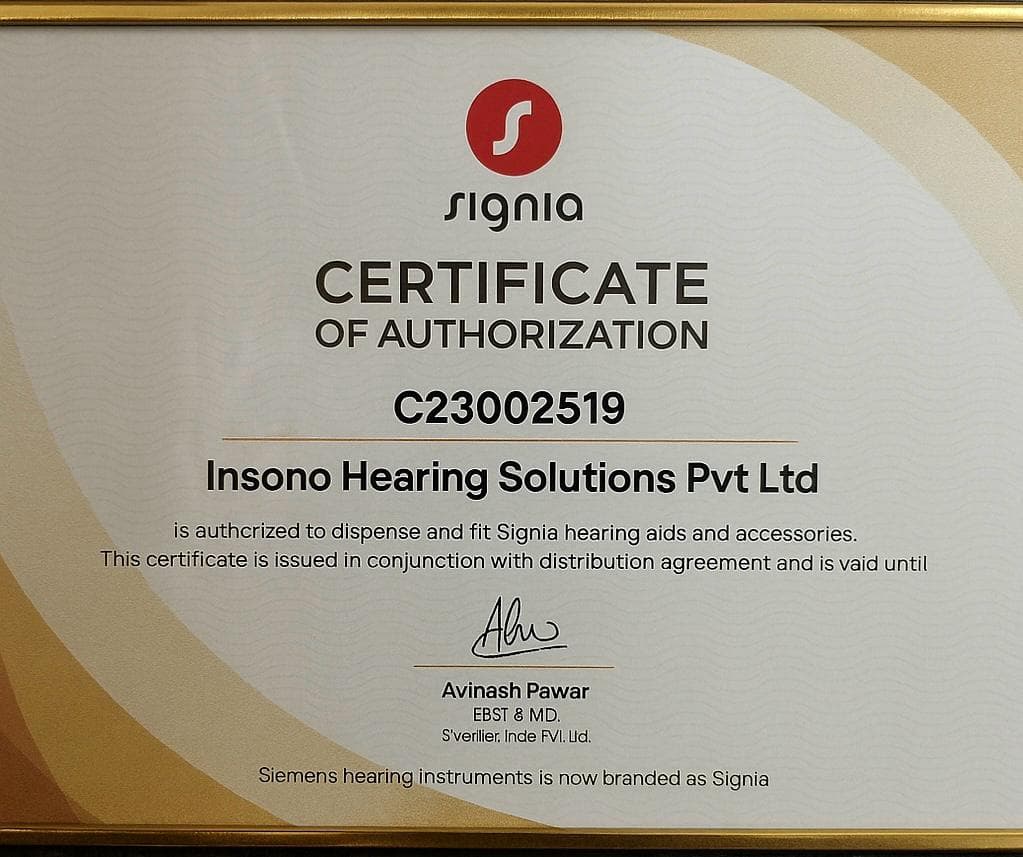
Official Certifications from Widex, Signia & Phonak
Insono Hearing Solutions is an authorized partner for leading global hearing aid brands including Widex, Signia, Phonak, and Oticon. These certifications reflect our trusted expertise and commitment to world-class hearing care in India.


Discover the Different Types of Hearing Aids for Better Hearing
Learn about the latest digital hearing aids, from behind-the-ear (BTE) to completely-in-canal (CIC) devices. Find the right style, features, and comfort level that suit your lifestyle.