Oticon
OTICON HIT D In-The-Canal (ITC) Hearing Aid
₹22,000MRP
Technology
AI-PoweredNoise CancellationTinnitus Masking
Style
ITC
Available Colors
BlackBrownGreySilverBeigeDark ChampagnePearl White
Suitable For
Mild Hearing LossModerate Hearing LossSevere Hearing Loss
✅ Free 3-day home trial·🚚 Cash on delivery·🛡️ Genuine warranty
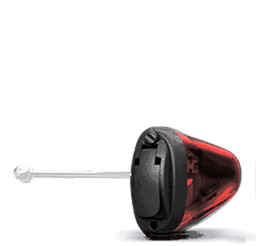
The Oticon HIT D ITC (In-The-Canal) Hearing Aid is a compact, custom-fit digital hearing solution designed for people who want a discreet hearing aid positioned partly inside the ear canal while still requiring useful amplification and practical controls. As part of the Oticon HIT family, the HIT D ITC combines digital sound processing with features intended to support speech audibility, listening comfort, feedback management and improved listening across everyday acoustic environments.
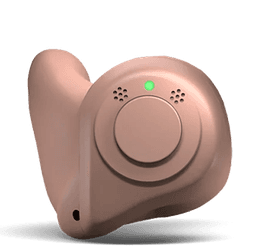
The ITC design is particularly suitable for users who prefer a smaller and less visible hearing aid than a conventional behind-the-ear device. Because the instrument is custom-made for the individual ear, the shell is shaped according to the ear impression and hearing requirements of the wearer. The hearing aid sits in the ear canal with a portion of the device remaining visible for access to the controls and battery compartment.
The Oticon HIT platform was developed around practical digital hearing technology, including directional processing, noise-management functions and feedback control. The documented HIT family also includes features such as Front Focus, wind-noise protection, AutoPhone, telecoil and compatibility with selected FM/DAI solutions in supported configurations. Feature availability can depend on the exact instrument configuration and fitting.
For the HIT D ITC specifically, Indian hearing-aid catalogues list a 4 I 4 configuration, an approximate 85 dB HL fitting range, and a size-312 disposable battery with approximately 140 hours of calculated battery life.
The HIT D ITC should therefore be viewed as a practical traditional digital hearing aid rather than a modern wireless or rechargeable hearing system. Its strengths are its discreet custom ITC format, digital processing, adjustable fitting characteristics and established Oticon HIT technology.
What Does ITC Mean?
ITC stands for In-The-Canal. An ITC hearing aid is custom-made to sit partly inside the ear canal. Compared with a conventional BTE hearing aid, the main electronic housing is positioned much closer to the ear canal.
The ITC format provides a balance between discretion and usability. It is generally more visible than a CIC or IIC hearing aid but provides more physical space for electronics, microphones and user controls.
For many users, this makes an ITC design a practical option when they want:
A relatively discreet hearing aid
Custom fitting for their ear
A compact design
Easy access compared with very small CIC devices
Traditional disposable-battery operation
Digital sound processing
Useful hearing support for everyday conversations
The final suitability of an ITC device depends on the user's hearing test, ear anatomy, dexterity, lifestyle and amplification requirements. A professional hearing assessment should always be completed before selecting the device.
Key Features of Oticon HIT D ITC
1. Custom In-The-Canal Design
The Oticon HIT D ITC is designed as a custom in-the-canal hearing aid. The shell is made to correspond with the user's individual ear shape.
This custom approach can provide a more secure and personalized fit than a universal hearing-aid design. Proper physical fitting is particularly important because the hearing aid must sit correctly in the ear canal to provide appropriate acoustic performance.
The ITC format also helps keep much of the device within the ear, making it a discreet option for users who do not want a conventional behind-the-ear hearing aid.
2. Fully Digital Hearing Technology
The HIT family uses digital hearing-aid processing to analyse and modify incoming sound before delivering amplification to the ear.
Digital processing allows the hearing aid to apply programmed amplification according to the user's hearing-loss profile. Rather than simply making every sound louder, the device can be professionally programmed to provide different levels of amplification across its available fitting bands.
This is important because hearing loss is not necessarily the same at every frequency. A person may require considerably different amplification for low, middle and high frequencies.
3. 4-Channel / 4-Band Processing
The HIT D ITC is listed with a 4 I 4 configuration, indicating four fitting channels/bands in the available catalogue specification.
Multiple fitting channels allow the hearing-care professional to make more detailed adjustments to the amplification response than a simple single-band system.
During fitting, the audiologist can use the patient's audiogram and listening requirements to adjust amplification across the available frequency regions.
This can help achieve a more individualized balance between audibility and listening comfort.
4. Fitting Range Up to Approximately 85 dB HL
The HIT D ITC is listed with a fitting range of approximately up to 85 dB HL.
This specification should not be interpreted as meaning that every person with hearing loss up to 85 dB HL will automatically be suitable for this particular instrument. Hearing-aid selection depends on the complete audiogram, speech understanding, frequency-specific hearing loss, ear anatomy and required gain.
A qualified hearing professional should determine whether the available output and gain are appropriate for the individual patient.
5. Directional Microphone Technology
The HIT platform incorporates automatic directionality to help the hearing aid respond appropriately to different acoustic situations.
In a directional listening situation, the system can place greater emphasis on sounds arriving from the front while reducing the relative emphasis on some sounds arriving from other directions.
This can be useful when the wearer is facing another person in a conversation, particularly when there are competing sounds in the environment.
The purpose is not to eliminate background noise completely. Instead, directional processing is intended to improve the balance between important sounds and competing environmental sound.
6. Noise Management
The Oticon HIT platform incorporates noise-management technology designed to provide greater listening comfort when environmental noise is present.
Real-world listening environments can include fans, traffic, air conditioners, restaurant activity, household appliances and multiple people talking simultaneously.
Noise-management processing can help manage unwanted or fluctuating environmental sound while maintaining useful amplification for the wearer.
The actual benefit will vary according to the user's hearing loss, acoustic environment, fitting and individual listening preferences.
7. Dynamic Feedback Cancellation 2
Feedback is the whistling or squealing sound that can occur when amplified sound from the hearing aid leaks back toward the microphone and is re-amplified.
The HIT family documentation identifies Dynamic Feedback Cancellation 2 (DFC2) as part of its feedback-management technology.
Feedback management is especially important for custom hearing aids because the device is positioned close to the ear canal. Proper shell fit remains equally important.
A correctly fitted hearing aid should be checked by a hearing-care professional if persistent whistling occurs.
8. Front Focus
The HIT platform includes Front Focus, a feature designed to provide a listening configuration that emphasizes sounds from the front.
This can be useful in situations where the wearer is concentrating on a person speaking in front of them.
For example, during a face-to-face conversation, the listener generally wants to focus on the person directly in front rather than giving equal attention to every sound around them.
The feature should be understood as a listening aid rather than a complete noise-removal system.
9. Open-Ear Acoustics
The HIT family incorporates open-ear acoustic concepts in appropriate configurations.
Open-ear acoustics are intended to provide a more natural relationship between amplified sound and the sound entering the ear naturally.
The exact acoustic configuration of a custom ITC device depends on the individual shell, venting, hearing loss and fitting requirements. Therefore, the acoustic characteristics of the individual HIT D ITC should be confirmed during professional fitting.
10. Wind-Noise Protection
Wind can produce unwanted microphone noise, especially outdoors.
The HIT platform includes wind-noise protection designed to help manage the effects of wind reaching the hearing-aid microphones.
This can be useful for people who spend time walking outdoors, travelling, sitting near open windows or participating in other activities where wind can affect microphone performance.
11. AutoPhone
The HIT platform includes an AutoPhone function.
This technology is designed to help the hearing aid respond when the user places a telephone close to the hearing instrument.
For users who regularly use a conventional telephone, this can make telephone listening more convenient.
The actual behaviour depends on the specific configuration and fitting of the hearing aid.
12. Telecoil Support in Supported Configurations
The HIT family documentation includes telecoil functionality in supported configurations.
A telecoil can be useful in locations equipped with compatible induction-loop systems. Such systems may be available in selected public venues, meeting rooms, theatres or other listening environments.
Telecoil availability should be confirmed for the exact HIT D ITC configuration before promising this feature to a patient.
13. FM / DAI Compatibility in Supported Configurations
The HIT platform also supports selected FM/DAI solutions in configurations designed for such connectivity.
FM and DAI systems are traditionally used to transmit sound from a compatible external source directly to a hearing aid.
This can be useful in educational, professional or specialised listening environments.
Because accessory compatibility can depend on the exact hearing-aid configuration, it should be verified with the hearing-care professional before purchase.
14. Multiple Listening Programs
The HIT platform supports multiple programmed listening settings in documented configurations.
Different programs can be created for different listening situations, depending on the exact instrument configuration and professional fitting.
For example, a hearing-care professional may configure programs intended for general everyday listening or other specific environments.
The available program options should be confirmed during fitting.
Technical Specifications
Specification Oticon HIT D ITC
Brand Oticon
Product Family HIT
Model HIT D ITC
Hearing Aid Style In-The-Canal (ITC)
Technology Digital
Channels / Bands 4 I 4
Approx. Fitting Range Up to 85 dB HL
Battery Type Size 312 disposable battery
Approx. Calculated Battery Life 140 hours
Fitting Professionally programmed
Directionality Available within HIT platform/configuration
Noise Management Available within HIT platform
Feedback Management Dynamic Feedback Cancellation 2
Front Focus HIT platform feature
Wind-Noise Protection HIT platform feature
AutoPhone Supported within applicable configuration
Telecoil Available in supported configurations
FM / DAI Supported in applicable configurations
Bluetooth Not to be assumed
Rechargeable Battery No
Smartphone Streaming Not to be assumed
AI/DNN Processing Not a documented HIT D feature
The model-specific specifications above are based on Indian catalogue listings, while the functional features are based on documented Oticon HIT-family information.
Battery and Daily Use
The HIT D ITC uses a size-312 disposable battery. Indian catalogue specifications list approximately 140 hours of calculated battery life for this model.
Actual battery duration can vary according to hearing-aid settings, listening environment, battery quality and individual usage.
Oticon's general battery guidance recommends opening the battery drawer when a disposable-battery hearing aid is not being used. Batteries should be handled carefully and kept away from children and pets.
A user should replace the battery when the hearing aid gives its low-battery warning or when performance begins to reduce.
Comfort and Discreet Appearance
One of the major reasons people consider an ITC hearing aid is its relatively discreet appearance.
Unlike a conventional BTE instrument, the primary hearing-aid housing is located inside the ear. Only part of the faceplate remains visible.
The actual appearance varies depending on the patient's ear anatomy and the size required for the electronics and controls.
Because the HIT D ITC is custom-made, the physical fit should be evaluated carefully. An uncomfortable or poorly fitting custom hearing aid may require modification or a new shell.
Speech and Conversation Support
The main purpose of a hearing aid is to improve access to important sounds and support communication.
The HIT D ITC combines digital amplification with directional processing, noise-management functions and feedback control to provide a structured approach to everyday listening.
In a quiet conversation, amplification can help make speech more audible when the hearing loss has reduced the user's access to speech sounds.
In a noisier environment, directional and noise-management functions are intended to help the wearer focus more effectively on the listening situation.
However, hearing aids do not restore normal hearing, and performance varies between individuals. Results depend on the degree and type of hearing loss, speech discrimination, fitting accuracy, wearing time and the acoustic environment.
Who May Consider the Oticon HIT D ITC?
The HIT D ITC may be considered by adults who:
Prefer an in-the-ear hearing-aid style
Want a more discreet alternative to a conventional BTE
Have hearing loss within the device's appropriate fitting range
Prefer a custom-made hearing aid
Want traditional disposable-battery operation
Need professionally adjustable digital amplification
Regularly participate in face-to-face conversations
Want a compact hearing solution
Prefer not to use a behind-the-ear style
A hearing assessment is essential before deciding whether this model is appropriate.
Professional Fitting Is Important
A custom ITC hearing aid should not simply be purchased and worn without professional programming.
The audiologist or hearing-care professional should:
Perform a comprehensive hearing assessment.
Review the patient's hearing history.
Check speech understanding where appropriate.
Take an ear impression when required.
Select the appropriate shell design.
Program the hearing aid according to the audiogram.
Verify the fitting.
Check comfort and physical fit.
Explain controls and battery replacement.
Fine-tune the device after the patient has used it in everyday situations.
Professional fitting is one of the most important factors influencing hearing-aid satisfaction.
Getting Used to the Hearing Aid
A person who has lived with hearing loss for a long time may initially find amplified sound unfamiliar.
Environmental sounds such as footsteps, utensils, fans, paper movement and traffic may become more noticeable.
The HIT platform includes adaptation-related technology in documented configurations to help support a gradual transition to amplified sound.
Users should follow the fitting professional's recommendations rather than immediately changing the amplification themselves.
Consistent use can help the wearer become more familiar with amplified sound and learn how to use the hearing aid effectively.
Care and Maintenance
Proper maintenance is essential for the performance and longevity of an ITC hearing aid.
The hearing aid should be protected from excessive moisture, heat, dust and physical impact.
Users should:
Keep the hearing aid clean.
Avoid exposing it to water.
Remove the device before bathing or swimming unless specifically rated for that environment.
Keep the battery compartment clean and dry.
Replace batteries when required.
Store the hearing aid safely when it is not being worn.
Avoid dropping the device.
Schedule professional cleaning when necessary.
Have the hearing aid checked if sound becomes weak or distorted.
Contact the hearing-care professional if persistent feedback occurs.
Oticon's general care guidance also recommends appropriate cleaning practices for hearing aids and professional attention when components require replacement or servicing.
Important Note About Modern Connectivity
The Oticon HIT D belongs to an older generation of digital hearing technology.
It should not be marketed as a modern Bluetooth hearing aid, rechargeable hearing aid, AI hearing aid or direct smartphone-streaming device unless a separate, exact configuration document confirms such functionality.
Modern Oticon products can offer Bluetooth, rechargeable technology and newer processing platforms, but those capabilities should not automatically be transferred to the older HIT D family.
This distinction is important when preparing accurate product information for patients.
Why Choose an ITC Hearing Aid?
An ITC hearing aid offers a practical balance between discretion, accessibility and amplification capability.
Very small hearing aids can be attractive because they are less visible, but their smaller physical size can limit the available space for controls and electronics.
An ITC design provides more room while still keeping the device primarily inside the ear.
For users who want a traditional custom hearing aid with digital processing and practical features, the HIT D ITC can be considered as part of an appropriately selected hearing-care solution.
Oticon HIT D ITC vs Conventional BTE
The HIT D ITC and HIT D BTE belong to the same broader HIT family but use different physical designs.
The ITC version sits in the ear and is more discreet, while the BTE version places the main electronics behind the ear.
The HIT D ITC is listed with a size-312 battery and approximately 140 hours of calculated battery life, while the HIT D BTE is listed with a size-13 battery and approximately 220 hours in the same Indian catalogue. The HIT D BTE is also listed with an approximately 85 dB HL fitting range.
The appropriate style depends on hearing requirements, ear anatomy, dexterity, cosmetic preference and the user's lifestyle.
Patient-Friendly Benefits
From a user's perspective, the Oticon HIT D ITC can provide several practical benefits:
Discreet design: The hearing aid sits primarily inside the ear.
Custom fit: The shell is made according to the individual ear.
Digital amplification: Sound can be processed and amplified according to the patient's hearing profile.
Multiple fitting channels: Four-band/channel processing provides professional fitting flexibility.
Directional processing: Helps manage the balance between front-facing speech and surrounding sound in appropriate listening situations.
Noise management: Designed to improve listening comfort when background sound is present.
Feedback management: DFC2 helps control unwanted acoustic feedback.
Telephone support: AutoPhone is available within the documented HIT platform/configurations.
Traditional battery operation: Uses a commonly available size-312 disposable hearing-aid battery.
Compact format: Suitable for users who prefer an in-the-ear solution over a conventional behind-the-ear design.
Important Considerations Before Purchase
The HIT D ITC is an older digital hearing-aid model, so patients should have realistic expectations about its capabilities.
It is not appropriate to compare it directly with the newest Oticon hearing aids solely on the basis of modern connectivity or processing technology.
The correct comparison should consider:
Hearing-loss severity
Speech understanding
Required gain
Number of channels
Physical style
Battery requirement
Telecoil requirement
Telephone usage
Noise exposure
Cosmetic preference
Manual-control requirements
Professional fitting support
After-sales service
A hearing-care professional should evaluate these factors before recommending the device.
Final Overview
The Oticon HIT D In-The-Canal (ITC) Hearing Aid is a compact, custom-made digital hearing solution designed for users who want an in-the-ear hearing aid with a discreet appearance and professionally adjustable amplification.
Its documented specifications include 4-channel/4-band processing, an approximate fitting range up to 85 dB HL, a size-312 disposable battery and approximately 140 hours of calculated battery life.
The broader HIT technology platform adds practical features such as directional processing, noise management, Dynamic Feedback Cancellation 2, Front Focus, wind-noise protection and AutoPhone, with telecoil and FM/DAI functionality available in supported configurations.
The HIT D ITC can therefore be considered for adults seeking a traditional custom hearing aid that combines compact design with established digital hearing technology.
As with any hearing aid, the best results depend on accurate hearing assessment, correct device selection, professional programming, physical comfort and appropriate follow-up. A hearing aid should be selected according to the individual's audiogram and communication needs rather than appearance or specifications alone.
For users looking for a discreet custom hearing solution and whose hearing profile falls within the model's appropriate fitting range, the Oticon HIT D ITC represents a practical option from Oticon's earlier generation of digital hearing-aid technology.
More Oticon Hearing Aids
OTICON GO PRO D VC / GO PRO D Behind-The-Ear (BTE) Hearing Aid
OTICON GO PRO POWER D Behind-The-Ear (BTE) Hearing Aid
OTICON GO PRO D In-The-Canal (ITC) Hearing Aid
OTICON GO PRO In-The-Canal (ITC) Hearing Aid
OTICON GO PRO PB Completely-In-Canal (CIC) Hearing Aid
OTICON GO PRO PB POWER Behind-The-Ear (BTE) Hearing Aid
OTICON GO PRO D VC / GO PRO D Behind-The-Ear (BTE) Hearing Aid
OTICON GO PRO POWER D Behind-The-Ear (BTE) Hearing Aid
OTICON GO PRO D In-The-Canal (ITC) Hearing Aid
OTICON GO PRO In-The-Canal (ITC) Hearing Aid
OTICON GO PRO PB Completely-In-Canal (CIC) Hearing Aid
OTICON GO PRO PB POWER Behind-The-Ear (BTE) Hearing Aid
Frequently Asked Questions
What is a Oticon hearing aid?▼
Oticon is a world-leading hearing aid brand known for its advanced technology, exceptional sound quality, and reliability. The OTICON HIT D In-The-Canal (ITC) Hearing Aid is one of their premium models designed to help people with hearing loss experience clear, natural sound.
What technology does the OTICON HIT D In-The-Canal (ITC) Hearing Aid use?▼
The OTICON HIT D In-The-Canal (ITC) Hearing Aid features AI-Powered, Noise Cancellation, Tinnitus Masking. These technologies work together to deliver outstanding clarity, comfort, and connectivity for the wearer.
What is the style and shape of the OTICON HIT D In-The-Canal (ITC) Hearing Aid?▼
The OTICON HIT D In-The-Canal (ITC) Hearing Aid is available in ITC style(s). This style balances comfort, discretion, and performance.
What level of hearing loss is the OTICON HIT D In-The-Canal (ITC) Hearing Aid suitable for?▼
The OTICON HIT D In-The-Canal (ITC) Hearing Aid is recommended for individuals with Mild Hearing Loss, Moderate Hearing Loss, Severe Hearing Loss. We advise getting a professional hearing assessment to confirm the best solution for your specific needs.
What is the price of the OTICON HIT D In-The-Canal (ITC) Hearing Aid?▼
The OTICON HIT D In-The-Canal (ITC) Hearing Aid is priced at ₹22,000. Insono Hearing offers flexible EMI options and financing. Contact us for the latest offers and to schedule a free trial.
Where can I get a free trial of the OTICON HIT D In-The-Canal (ITC) Hearing Aid in India?▼
Insono Hearing offers free trials for the OTICON HIT D In-The-Canal (ITC) Hearing Aid at our clinics. Book an appointment online or call us to experience the device before making a decision.
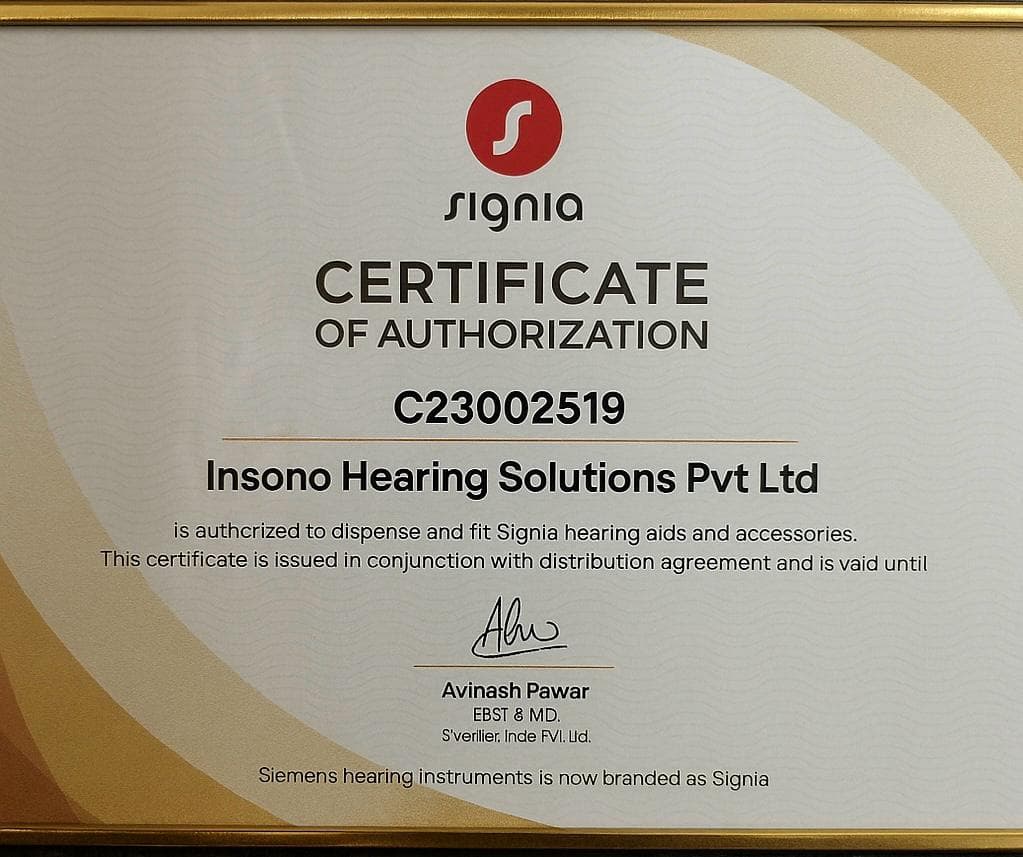
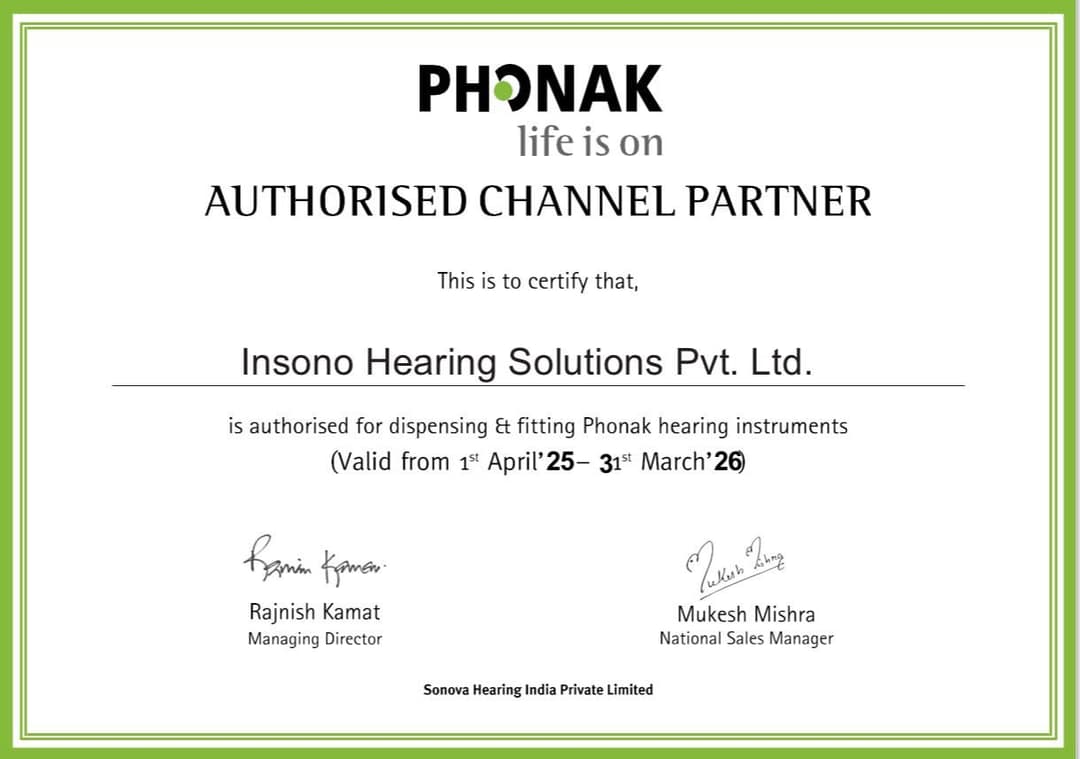
Official Certifications from Widex, Signia & Phonak
Insono Hearing Solutions is an authorized partner for leading global hearing aid brands including Widex, Signia, Phonak, and Oticon. These certifications reflect our trusted expertise and commitment to world-class hearing care in India.

Discover the Different Types of Hearing Aids for Better Hearing
Learn about the latest digital hearing aids, from behind-the-ear (BTE) to completely-in-canal (CIC) devices. Find the right style, features, and comfort level that suit your lifestyle.