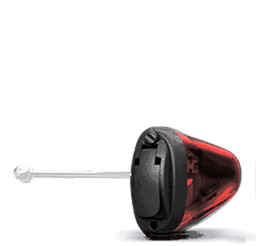
Oticon
OTICON HIT D Behind The Ear (BTE) Hearing Aid
₹22,000MRP
Technology
AI-PoweredNoise CancellationTinnitus Masking
Style
BTE
Available Colors
BlackGreySilverBeigeDark ChampagnePearl WhiteBrown
Suitable For
Mild Hearing LossModerate Hearing LossSevere Hearing LossProfound Hearing Loss
✅ Free 3-day home trial·🚚 Cash on delivery·🛡️ Genuine warranty
The Oticon HIT D Behind-The-Ear (BTE) Hearing Aid is a compact digital hearing solution designed to provide personalized amplification for people with hearing loss who prefer a conventional behind-the-ear hearing-aid style. It belongs to the Oticon HIT family, an earlier generation of digital hearing technology developed to support audibility, speech understanding, listening comfort and everyday communication.
The HIT D BTE combines digital signal processing with features such as automatic directionality, noise management, feedback cancellation, open-ear acoustics and multiple listening programs. The platform was designed to give hearing-care professionals flexibility when fitting different degrees and configurations of hearing loss.
Available product catalogues identify the Oticon HIT D BTE as a 4-band/4-channel digital hearing aid, with a fitting range of approximately 85 dB HL, a size-13 battery, and approximately 220 hours of listed battery life.
Because Oticon HIT is an earlier product generation, this model should be distinguished from newer Oticon hearing aids. Modern features such as rechargeable lithium-ion batteries, Bluetooth Low Energy, direct smartphone streaming, artificial intelligence, deep-neural-network processing and newer Oticon processing platforms should not be attributed to HIT D BTE unless specifically confirmed for the exact instrument.
PRODUCT OVERVIEW
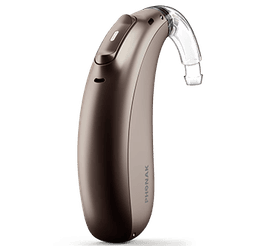
A Behind-The-Ear hearing aid places the main electronic components in a small housing positioned behind the ear. Sound is then delivered to the ear through the appropriate acoustic coupling, such as an earhook, tubing and earmould.
This traditional architecture has several practical advantages.
The hearing-aid body can accommodate components required for amplification while remaining outside the ear canal. The fitting can also be adapted to different degrees of hearing loss by selecting an appropriate coupling and programming strategy.
The Oticon HIT D BTE is designed for users whose hearing loss falls within its practical fitting capability and who want a traditional, programmable digital hearing aid.
The hearing-care professional programs the device according to the user's audiogram and adjusts the hearing aid for appropriate gain, comfort, feedback control and listening requirements.
KEY FEATURES OF OTICON HIT D BTE
1. Traditional Behind-The-Ear Design
The HIT D BTE uses a conventional behind-the-ear design.
The hearing-aid housing sits behind the ear while the amplified signal travels through an appropriate coupling into the ear.
This design is widely used because it provides room for hearing-aid electronics while allowing the hearing professional to select different earmould and coupling options.
A BTE can be appropriate for users who need more amplification than very small custom hearing aids can conveniently provide.
It can also be easier for some users to handle because the main device is positioned outside the ear.
2. Digital Programmable Technology
The Oticon HIT D BTE is a digital programmable hearing aid.
Digital processing allows the hearing-care professional to tailor the device according to the individual's hearing loss.
This is important because hearing loss can vary considerably between people.
For example, one individual may have primarily high-frequency hearing loss, while another may have hearing loss across both low and high frequencies.
The hearing professional can therefore adjust amplification across different frequency regions rather than applying one identical response to every user.
3. Four-Band/Four-Channel Processing
Available product catalogues identify the HIT D BTE as a 4 I 4 device, generally representing four fitting bands/channels.
Multiple fitting bands provide the audiologist with greater control over the amplification response.
Different frequency regions can be adjusted according to the user's audiogram.
This is particularly useful because speech information is distributed across a broad frequency range.
High-frequency information can contribute to the audibility of consonants, while lower-frequency information contributes to speech loudness and other sound characteristics.
The hearing professional can balance these regions to create an appropriate fitting.
4. Approximately 85 dB HL Fitting Range
Available Indian product information lists the HIT D BTE with an approximate 85 dB HL fitting range.
This places the standard HIT D BTE in a significantly different category from the HIT Power D BTE, which is designed for substantially greater amplification requirements.
The listed fitting range should be treated as a technical reference rather than a recommendation for every user.
An audiologist should assess:
Air-conduction thresholds
Bone-conduction thresholds
Speech recognition
Word recognition
Hearing-loss configuration
Loudness tolerance
Feedback requirements
Ear anatomy
Communication needs
If a user requires substantially more output, a power BTE or another suitable high-output hearing aid may be more appropriate.
5. 8 kHz Bandwidth
The HIT family is documented with an 8 kHz bandwidth.
Bandwidth describes the range of frequencies available for processing and reproduction.
Access to higher-frequency sound information is important for many speech cues and environmental sounds.
For users with high-frequency hearing loss, appropriate high-frequency amplification can help make certain speech details more audible.
However, the amount of amplification that should be provided at high frequencies depends on the individual's hearing thresholds and tolerance.
The audiologist should therefore determine the appropriate frequency response during the fitting process.
6. Automatic Directionality
Automatic directionality is a documented HIT family feature.
Directional microphone technology can help the hearing aid give greater emphasis to sounds arriving from a preferred direction while reducing the relative influence of competing sounds from other directions.
This can be particularly useful when speaking with someone face-to-face.
For example, if the user is sitting across from another person in a moderately noisy environment, directional processing may help prioritize the frontal listening area.
Automatic directionality is designed to adapt to listening conditions rather than requiring the user to manually select a directional mode every time.
Directionality does not completely remove background noise. Complex environments with multiple speakers, reflections and competing sounds can still be challenging.
7. Noise Management
The HIT platform includes modulation-based noise management.
Noise management is intended to reduce the impact of unwanted background sounds while maintaining useful auditory information.
This can be beneficial in situations such as:
Restaurants
Family gatherings
Busy homes
Offices
Shopping areas
Outdoor locations
Public environments
The system does not make the surroundings completely silent.
Instead, it attempts to manage competing noise so that the overall listening experience can be more comfortable.
The actual benefit varies according to the acoustic environment and the user's individual hearing ability.
8. Dynamic Feedback Cancellation 2
The HIT family incorporates Dynamic Feedback Cancellation 2 (DFC2).
Feedback is the familiar high-pitched whistling or squealing that can occur when amplified sound escapes from the ear and is picked up again by the hearing-aid microphone.
Feedback can be particularly noticeable when high levels of amplification are required.
DFC2 is designed to monitor and manage feedback while maintaining the desired amplification.
However, electronic feedback cancellation is only one part of feedback management.
Persistent feedback can also indicate:
Poor earmould fit
Earwax
Damaged tubing
Loose coupling
Incorrect programming
Changes in the ear canal
Excessive acoustic leakage
A hearing-care professional should investigate persistent feedback rather than simply increasing or decreasing volume.
9. Open-Ear Acoustics
Open-ear acoustics are included within the HIT platform.
An open fitting allows naturally occurring environmental sound to enter the ear while the hearing aid supplies amplification where required.
This can provide a less occluded listening experience for suitable hearing losses.
Open fittings can be particularly appropriate for some users who have relatively good low-frequency hearing but require high-frequency amplification.
However, not every hearing loss is suitable for an open fitting.
If greater amplification is required, a more closed earmould or coupling may be necessary.
The audiologist should select the appropriate acoustic coupling based on the audiogram and feedback requirements.
10. Front Focus
The HIT platform includes Front Focus.
This processing approach is designed to support listening when the primary sound source is located in front of the wearer.
This can be useful during:
One-to-one conversations
Meetings
Family discussions
Classroom-style situations
Face-to-face communication
The feature works as part of the broader directional-processing strategy.
It is not intended to make all other sounds disappear but rather to help prioritize the relevant listening direction in appropriate circumstances.
11. Wind Noise Protection
Wind can create unwanted sound when it reaches the hearing-aid microphones.
The HIT family includes wind-noise protection designed to reduce the disruptive influence of wind.
This can be useful when the wearer is:
Walking outdoors
Sitting outside
Travelling
Riding in an open vehicle
Participating in outdoor activities
Wind-noise protection does not guarantee complete elimination of wind sound, particularly in strong or rapidly changing wind conditions.
12. Multiple Listening Programs
The HIT family provides multiple user programs, with documentation listing up to four user programs.
Different programs can be configured by the hearing professional according to the user's lifestyle.
Possible applications include:
General everyday listening
Quiet environments
Noisy environments
Telephone use
Other specific listening requirements
The exact programs available to an individual user depend on the final fitting and configuration.
13. Automatic Adaptation Management
The HIT platform documents an Automatic Adaptation Manager.
Adaptation management can be useful for individuals who are new to hearing aids.
A person who has experienced hearing loss for many years may initially find amplified environmental sounds unusually prominent.
Sounds such as fans, footsteps, water, dishes and traffic may suddenly become more noticeable.
A gradual adaptation strategy can help the user become accustomed to amplified sound.
The exact availability and behavior of adaptation management depend on the specific HIT configuration and fitting software.
14. AutoPhone
AutoPhone is documented as part of the HIT platform.
Telephone conversations can be challenging because the user does not have access to visual speech cues such as lip movements and facial expressions.
Where appropriately configured, AutoPhone can support telephone listening by switching the hearing aid into a suitable telephone program or mode.
The actual performance depends on the telephone, hearing-aid configuration and professional programming.
15. Telecoil
Telecoil functionality is documented within the HIT family.
A telecoil can receive compatible electromagnetic signals from hearing-loop systems.
This can be useful in venues such as:
Theatres
Auditoriums
Meeting halls
Places of worship
Public buildings
Telecoil availability should be verified for the exact HIT D BTE configuration before making a product-specific claim.
16. FM Compatibility
The HIT platform also documents FM compatibility.
FM systems can provide an additional communication link in environments where a compatible transmitter sends speech information to the hearing instrument.
Such systems have traditionally been useful in educational and communication environments.
The necessary accessories and exact compatibility should be confirmed for the particular hearing-aid configuration.
17. Direct Audio Input
DAI, or Direct Audio Input, is a traditional connectivity method associated with the HIT platform.
Compatible external audio equipment can be connected directly to the hearing instrument using appropriate accessories.
DAI should not be confused with modern Bluetooth connectivity.
It is a wired/direct audio technology rather than a modern smartphone wireless-streaming system.
18. Battery-Low Warning
The HIT platform includes a battery-low warning.
This helps alert the user when the battery is approaching the end of its usable life.
Users should carry spare batteries when appropriate, particularly when travelling or attending important events.
19. Sound Indicators
The HIT documentation includes sound indicators associated with programme changes.
Audible signals can help the wearer know when the hearing aid has changed programs or entered a different operating mode.
This provides straightforward feedback for users who prefer audible confirmation rather than relying on visual indicators.
BATTERY TYPE AND BATTERY LIFE
The Oticon HIT D BTE uses a size-13 disposable hearing-aid battery.
Available Indian product information lists approximately 220 hours of battery life for the HIT D BTE.
Actual battery life can vary substantially.
Factors include:
Daily wearing time
Degree of hearing loss
Gain settings
Listening environment
Program usage
Battery quality
Accessory use
Individual hearing-aid programming
Therefore, 220 hours should be regarded as a catalogue reference and not a guaranteed operating time.
WHY SIZE-13 BATTERY?
Size-13 batteries are commonly used in BTE hearing aids because their larger physical size provides greater energy capacity than smaller hearing-aid batteries.
For a conventional BTE, the size-13 battery provides a practical balance between hearing-aid power and battery capacity.
Users should keep spare batteries available and replace the battery according to the hearing aid's low-battery warning and professional instructions.
TECHNICAL SPECIFICATIONS
Specification Oticon HIT D BTE
Brand Oticon
Product Family HIT
Model HIT D
Style Behind-The-Ear (BTE)
Technology Digital programmable
Channels/Bands 4 / 4
Approx. Fitting Range Up to 85 dB HL
Bandwidth Up to 8 kHz
Battery Size 13
Listed Battery Life Approximately 220 hours
Directionality Automatic Directionality
Noise Management Modulation-based Noise Management
Feedback Cancellation Dynamic Feedback Cancellation 2
Open-Ear Acoustics Supported within HIT platform
Front Focus Yes
Wind Noise Protection Yes
AutoPhone Documented
Telecoil Available within supported configurations
FM Available within supported configurations
DAI Available within supported configurations
User Programs Up to 4 listed
Adaptation Management Documented within HIT platform
Battery Warning Yes
Rechargeable No; size-13 disposable battery
Bluetooth Not to be assumed
Smartphone Streaming Not to be assumed
The model-specific fitting range and battery information are based on available product catalogues, while the broader feature set comes from Oticon HIT documentation.
WHO MAY CONSIDER OTICON HIT D BTE?
The Oticon HIT D BTE may be considered for adults who:
Have hearing loss within the device's fitting capability
Prefer a conventional BTE hearing aid
Want programmable digital amplification
Require more amplification than a very small custom device may provide
Prefer replaceable batteries
Spend time in both quiet and moderately noisy environments
May benefit from directional microphone processing
Want noise-management features
Prefer traditional hearing-aid operation
Do not specifically require modern Bluetooth streaming
The device should be selected following a professional hearing assessment.
SPEECH UNDERSTANDING IN EVERYDAY LIFE
Hearing loss can make speech difficult to understand, particularly when important speech frequencies become less audible.
A hearing aid provides amplification designed to improve access to those sounds.
The HIT D BTE combines programmable amplification with directionality, noise management and feedback control.
In a quiet environment, amplification can help make conversation more audible.
In a more challenging environment, directional processing and noise management can help reduce the impact of competing sounds.
The hearing aid cannot guarantee perfect speech understanding.
The final result depends on:
Type of hearing loss
Degree of hearing loss
Speech recognition ability
Distance from the speaker
Background noise
Room acoustics
Hearing-aid programming
Consistency of use
LISTENING IN QUIET ENVIRONMENTS
The HIT D BTE can be programmed for comfortable everyday listening.
Typical situations include:
Conversations at home
Talking with family members
Watching television
Talking with a caregiver
Reading
Quiet office conversations
The audiologist can adjust gain and compression according to the user's hearing thresholds and comfort.
LISTENING IN NOISY ENVIRONMENTS
Background noise is one of the major challenges experienced by people with hearing loss.
The HIT platform's directional and noise-management systems are designed to help manage competing sounds.
Examples include:
Restaurants
Markets
Family functions
Group conversations
Busy offices
Outdoor environments
The technology cannot remove all background noise.
Users should also use practical communication strategies such as moving closer to the speaker, facing the person speaking and selecting quieter seating when possible.
PROFESSIONAL HEARING-AID FITTING
Correct programming is essential.
The hearing-care professional should:
Conduct a complete hearing assessment.
Review the audiogram.
Determine whether the HIT D BTE is appropriate.
Select suitable tubing and earmould/coupling.
Program the hearing aid.
Adjust gain according to the hearing loss.
Configure compression.
Set maximum output.
Configure directional processing.
Adjust noise management.
Check for feedback.
Configure listening programs.
Explain battery handling.
Explain maintenance.
Schedule follow-up visits.
The first programming session may not be the final setting.
Follow-up adjustments can be useful as the wearer becomes accustomed to amplification.
EARMOLD AND ACOUSTIC COUPLING
The acoustic coupling is an important part of a BTE hearing-aid fitting.
Depending on the user's hearing loss, the audiologist may select an appropriate earmould or other compatible coupling.
A suitable coupling can help:
Deliver adequate amplification
Reduce feedback
Maintain secure positioning
Improve sound transmission
Provide appropriate acoustic sealing
The more amplification a person requires, the more important appropriate acoustic coupling becomes.
COMFORT AND ADAPTATION
Comfort is an important consideration for long-term hearing-aid use.
The device should sit securely behind the ear without causing unnecessary pressure.
The earmould should fit comfortably without causing persistent irritation.
During the initial period, some sounds may appear louder than expected.
This can happen because the user is receiving amplified sound after a long period of reduced auditory input.
The user may gradually become accustomed to these sounds.
If sound remains uncomfortably loud or distorted, professional adjustment should be requested.
FEEDBACK MANAGEMENT
If the user experiences persistent whistling, the cause should be investigated.
Potential causes include:
Loose earmould
Earwax
Damaged tubing
Incorrect coupling
Changes in ear anatomy
Excessive amplification
Incorrect programming
The hearing-care professional can inspect the complete fitting and make the necessary adjustments.
CARE AND MAINTENANCE
Proper maintenance can help maintain hearing-aid performance.
Users should:
Keep the hearing aid away from excessive moisture.
Remove it before bathing or swimming.
Keep the earmould clean.
Check tubing regularly.
Keep microphone openings free of debris.
Replace batteries when necessary.
Store the hearing aid safely when not being worn.
Avoid excessive heat.
Avoid dropping the hearing aid.
Schedule professional servicing when required.
EARWAX MANAGEMENT
Earwax can affect BTE performance.
Excessive wax may reduce sound transmission or contribute to feedback.
If a previously well-functioning hearing aid suddenly becomes quiet or begins whistling, earwax should be considered as one possible cause.
Users should not insert sharp objects into the ear canal.
Appropriate ear examination and wax management should be performed by a qualified professional when required.
IS OTICON HIT D BTE RECHARGEABLE?
No.
Available specifications identify the HIT D BTE as using a size-13 disposable battery, rather than a modern rechargeable lithium-ion system.
Users should therefore maintain a suitable supply of compatible batteries.
DOES OTICON HIT D BTE HAVE BLUETOOTH?
The HIT D BTE should not be marketed as a Bluetooth hearing aid unless the exact device documentation confirms wireless connectivity.
The HIT generation uses traditional technologies such as telecoil, FM and DAI within supported configurations.
These technologies should not be described as equivalent to modern Bluetooth smartphone streaming.
OTICON HIT D BTE VERSUS HIT POWER D BTE
The two models belong to the same HIT generation but are designed for different levels of hearing loss.
Feature HIT D BTE HIT Power D BTE
Style BTE Power BTE
Channels/Bands 4/4 4/4
Approx. Fitting Range 85 dB HL 105 dB HL
Battery Size 13 Size 13
Listed Battery Life Approx. 220 hours Approx. 215 hours
Main Application Lower amplification requirements Higher amplification requirements
The figures above are catalogue specifications and should not replace professional hearing assessment.
ADVANTAGES OF OTICON HIT D BTE
The principal documented advantages include:
Conventional behind-the-ear design
Digital programmable amplification
Four-band/four-channel processing
8 kHz bandwidth
Approximate fitting range up to 85 dB HL
Automatic directionality
Noise-management processing
Dynamic Feedback Cancellation 2
Open-ear acoustics where appropriate
Front Focus
Wind-noise protection
Multiple listening programs
AutoPhone
Telecoil support within compatible configurations
FM compatibility within supported configurations
DAI compatibility within supported configurations
Adaptation-management functionality within the HIT platform
Size-13 replaceable battery
Approximately 220 hours of listed battery life
Professional fitting and programming
LIMITATIONS TO CONSIDER
The Oticon HIT D BTE is an earlier-generation hearing aid.
Customers who specifically require the latest wireless technologies should consider newer hearing-aid generations.
The HIT D BTE should not be described as having:
Rechargeable lithium-ion batteries
Modern Bluetooth streaming
Direct smartphone connectivity
AI-powered processing
Deep neural network technology
Current-generation Oticon BrainHearing features
Modern smartphone applications
unless such functionality is independently confirmed for a particular device.
Another important consideration is its approximately 85 dB HL listed fitting range. Users with more severe hearing loss may require the higher-output HIT Power D BTE or another suitable power hearing aid.
FINAL OVERVIEW
The Oticon HIT D Behind-The-Ear (BTE) Hearing Aid is a traditional digital programmable hearing instrument designed for users who need reliable amplification in a conventional behind-the-ear format.
Available product information lists the HIT D BTE with four-band/four-channel processing, an approximately 85 dB HL fitting range, 8 kHz bandwidth, size-13 battery and approximately 220 hours of listed battery life.
The HIT platform provides a range of practical hearing-support technologies, including automatic directionality, modulation-based noise management, Dynamic Feedback Cancellation 2, open-ear acoustics, Front Focus, wind-noise protection, multiple listening programs and adaptation management.
Traditional features such as AutoPhone, telecoil, FM and DAI are also documented within the HIT platform for supported configurations.
The conventional BTE construction makes the device practical for users who prefer a hearing aid positioned behind the ear and who require a fitting approach that can accommodate different earmould and coupling options.
The device is particularly appropriate to consider when the user's hearing loss falls within its fitting capability and when modern wireless or rechargeable functions are not the primary requirement.
As with any hearing aid, the technology itself is only one part of successful hearing rehabilitation. A complete hearing assessment, appropriate device selection, accurate programming, correct acoustic coupling, feedback verification, user education and follow-up adjustments are all important.
The Oticon HIT D BTE is therefore best presented as an established, programmable digital BTE hearing aid from an earlier Oticon generation, with its strengths centered on personalized amplification, directional processing, noise management, feedback control and practical everyday hearing support.
More Oticon Hearing Aids
OTICON GO PRO D VC / GO PRO D Behind-The-Ear (BTE) Hearing Aid
OTICON GO PRO POWER D Behind-The-Ear (BTE) Hearing Aid
OTICON GO PRO D In-The-Canal (ITC) Hearing Aid
OTICON GO PRO In-The-Canal (ITC) Hearing Aid
OTICON GO PRO PB Completely-In-Canal (CIC) Hearing Aid
OTICON GO PRO PB POWER Behind-The-Ear (BTE) Hearing Aid
OTICON GO PRO D VC / GO PRO D Behind-The-Ear (BTE) Hearing Aid
OTICON GO PRO POWER D Behind-The-Ear (BTE) Hearing Aid
OTICON GO PRO D In-The-Canal (ITC) Hearing Aid
OTICON GO PRO In-The-Canal (ITC) Hearing Aid
OTICON GO PRO PB Completely-In-Canal (CIC) Hearing Aid
OTICON GO PRO PB POWER Behind-The-Ear (BTE) Hearing Aid
Frequently Asked Questions
What is a Oticon hearing aid?▼
Oticon is a world-leading hearing aid brand known for its advanced technology, exceptional sound quality, and reliability. The OTICON HIT D Behind The Ear (BTE) Hearing Aid is one of their premium models designed to help people with hearing loss experience clear, natural sound.
What technology does the OTICON HIT D Behind The Ear (BTE) Hearing Aid use?▼
The OTICON HIT D Behind The Ear (BTE) Hearing Aid features AI-Powered, Noise Cancellation, Tinnitus Masking. These technologies work together to deliver outstanding clarity, comfort, and connectivity for the wearer.
What is the style and shape of the OTICON HIT D Behind The Ear (BTE) Hearing Aid?▼
The OTICON HIT D Behind The Ear (BTE) Hearing Aid is available in BTE style(s). This style balances comfort, discretion, and performance.
What level of hearing loss is the OTICON HIT D Behind The Ear (BTE) Hearing Aid suitable for?▼
The OTICON HIT D Behind The Ear (BTE) Hearing Aid is recommended for individuals with Mild Hearing Loss, Moderate Hearing Loss, Severe Hearing Loss, Profound Hearing Loss. We advise getting a professional hearing assessment to confirm the best solution for your specific needs.
What is the price of the OTICON HIT D Behind The Ear (BTE) Hearing Aid?▼
The OTICON HIT D Behind The Ear (BTE) Hearing Aid is priced at ₹22,000. Insono Hearing offers flexible EMI options and financing. Contact us for the latest offers and to schedule a free trial.
Where can I get a free trial of the OTICON HIT D Behind The Ear (BTE) Hearing Aid in India?▼
Insono Hearing offers free trials for the OTICON HIT D Behind The Ear (BTE) Hearing Aid at our clinics. Book an appointment online or call us to experience the device before making a decision.
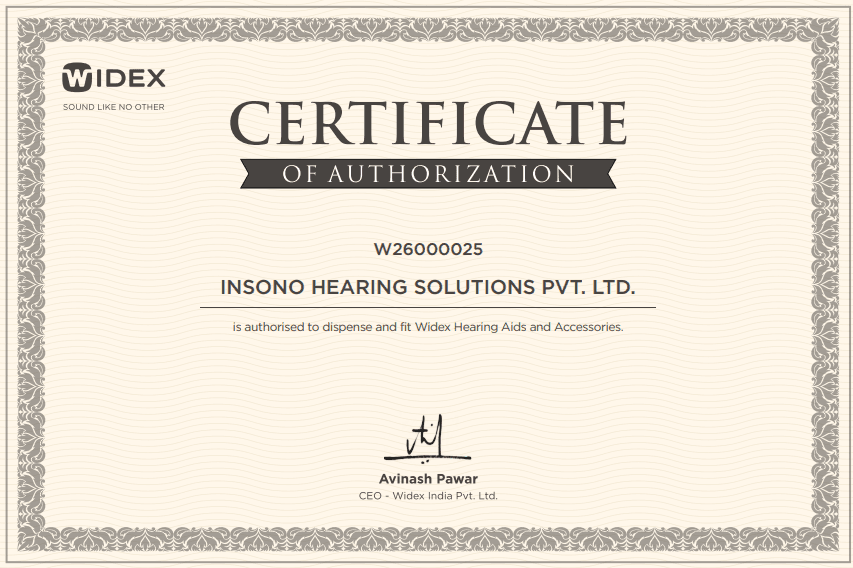
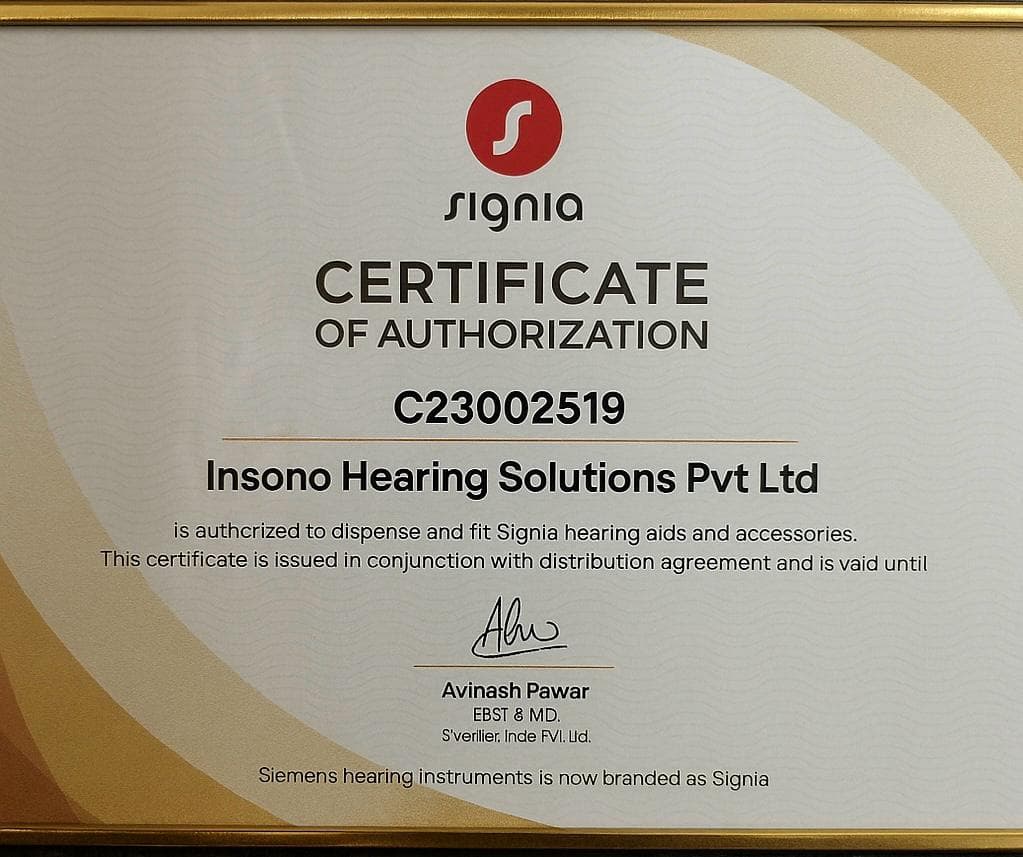
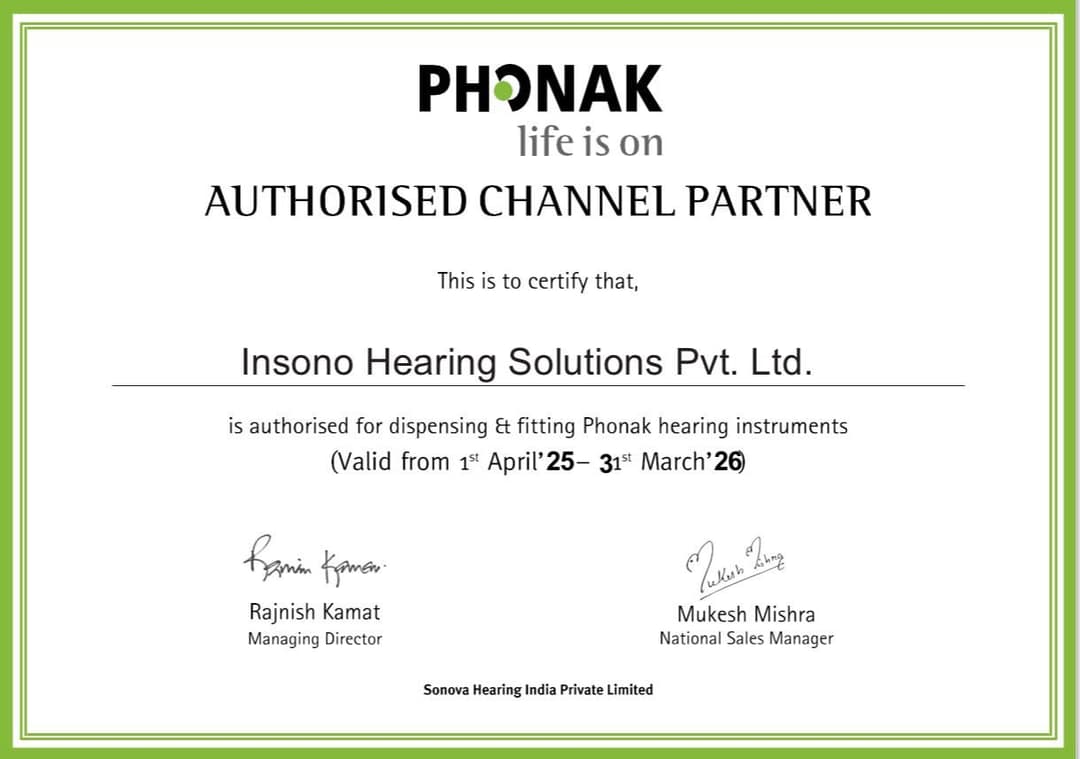
Official Certifications from Widex, Signia & Phonak
Insono Hearing Solutions is an authorized partner for leading global hearing aid brands including Widex, Signia, Phonak, and Oticon. These certifications reflect our trusted expertise and commitment to world-class hearing care in India.
Discover the Different Types of Hearing Aids for Better Hearing
Learn about the latest digital hearing aids, from behind-the-ear (BTE) to completely-in-canal (CIC) devices. Find the right style, features, and comfort level that suit your lifestyle.