Oticon
OTICON GET T In-The-Canal (ITC) Hearing Aid
₹18,000MRP
Technology
Noise CancellationAI-PoweredTinnitus Masking
Style
ITC
Available Colors
BlackGreySilverBeigeDark ChampagneBrown
Suitable For
Mild Hearing LossModerate Hearing Loss
✅ Free 3-day home trial·🚚 Cash on delivery·🛡️ Genuine warranty
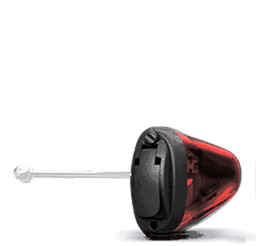
The Oticon GET T In-The-Canal (ITC) Hearing Aid is a custom-made digital hearing solution designed for users who want a discreet hearing aid that sits partially inside the ear canal. It belongs to the Oticon GET family, a hearing-aid range developed to provide essential hearing support with a practical and cost-conscious approach.
The GET family includes several hearing-aid styles, including Behind-The-Ear, power BTE and custom in-the-ear solutions such as CIC, ITC and ITE. Oticon describes the GET family as providing fundamental hearing-care benefits such as audibility, listening comfort, intelligibility, directionality and noise management. The family was designed to cover a broad range of hearing losses, from mild through severe-to-profound depending on the individual model and fitting configuration.
The ITC or In-The-Canal design is positioned partly within the ear canal, making it less visible than a conventional behind-the-ear hearing aid. Because the hearing aid housing is custom-made for the user's ear, it can provide a relatively discreet appearance while still allowing enough space for useful controls and components.
The Oticon GET T ITC is particularly suitable for users who prefer a custom hearing aid rather than a device worn behind the ear and who value discreetness, straightforward operation and reliable digital amplification.
What Does ITC Mean?
ITC stands for In-The-Canal.
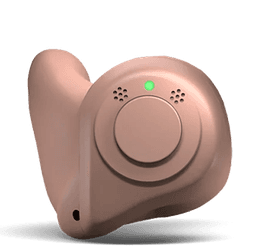
An ITC hearing aid is custom manufactured according to the shape and dimensions of the user's ear. The device sits partly inside the ear canal, while a portion of the hearing aid remains visible in the outer ear.
Compared with larger ITE styles, an ITC hearing aid generally provides a more discreet appearance. At the same time, the ITC shell has more physical space than very small CIC or IIC designs, allowing manufacturers to incorporate useful features and controls.
Oticon describes ITC hearing aids as small and discreet and notes that this style can accommodate features such as directional microphones and volume control.
Custom-Made Ear Fitting
One of the principal characteristics of the GET T ITC is its custom construction.
The hearing aid shell is manufactured to correspond to the user's ear anatomy. This allows the instrument to sit securely in the ear and provides a personalised physical fit.
A properly made custom shell can help improve comfort and stability during everyday activities. However, comfort depends on several factors, including ear anatomy, shell design, venting, insertion depth and the accuracy of the ear impression.
For this reason, the device should be fitted by a qualified hearing-care professional.
Discreet Hearing Aid Design
The GET T ITC is designed for people who prefer a less noticeable hearing solution.
Unlike a BTE hearing aid, there is no main electronic housing positioned behind the ear. The hearing-aid electronics are contained within the custom shell that sits in the ear.
This makes the ITC format attractive to users who are concerned about the visibility of their hearing aid.
The portion of the device that remains visible can be designed according to the individual's ear anatomy and available shell configuration.
Because every ear is different, the final appearance and size can vary from one user to another.
Digital Hearing Technology
The Oticon GET platform uses digital sound processing.
Digital hearing aids receive incoming acoustic signals through microphones, process those signals electronically and provide appropriately programmed amplification through the receiver.
The purpose is not simply to make every sound louder. Instead, the hearing aid can be programmed to provide different levels of amplification across frequency regions according to the user's audiogram.
This is particularly important because hearing loss can vary substantially between low, middle and high frequencies.
A person may, for example, have relatively good low-frequency hearing but considerably poorer high-frequency hearing. A properly programmed digital hearing aid can therefore provide more targeted amplification rather than applying identical amplification across all frequencies.
Four Fitting Bands
Oticon's GET documentation identifies four fitting bands and supports fitting flexibility using established prescriptive approaches including NAL-NL1, NAL-NL2 and DSL v5.0a m[i/o].
Fitting bands provide the hearing professional with control over amplification across different frequency regions.
This enables the audiologist to adjust the hearing aid according to the individual's hearing thresholds and listening requirements.
Although modern hearing aids may provide considerably more processing channels, the four-band architecture of the GET platform was designed to provide practical adjustment and appropriate amplification for its intended generation of technology.
Directionality
Directionality is one of the core hearing-support features associated with the Oticon GET family.
Directional microphone processing is designed to provide greater emphasis to sound arriving from a particular direction while reducing the relative contribution of sounds arriving from other directions.
This can be helpful when the user is communicating with another person in a noisy environment.
For example, during a conversation in a restaurant, there may be voices, dishes, fans and other competing sounds around the listener. Directional processing can help improve the balance between the primary speaker and surrounding sound.
The GET documentation identifies several directional configurations, including Surround, Split Directionality and Full Directionality, depending on the instrument configuration.
Directionality for Different Listening Situations
The availability of different directional settings provides flexibility for fitting.
A hearing professional can configure different programs according to the user's needs.
For example, one program may use an omnidirectional setting for general awareness, while another may use directional processing for situations where the user wants greater emphasis on speech from in front.
This allows the hearing aid to be configured for different everyday listening situations.
The GET documentation states that multiple programs can be used to configure different directionality modes for different listening situations.
Noise Management
The Oticon GET family incorporates Noise Management designed to make listening more comfortable in environments where background noise is present.
Oticon's technical documentation describes its noise-management system as using a speech-weighted approach, primarily reducing noise in frequency bands that carry less speech information.
This is important because excessive background noise can make conversations tiring and difficult to follow.
The purpose of noise management is not to remove all environmental sound. Instead, it is designed to reduce the impact of unwanted noise while maintaining access to important speech and environmental information.
Dynamic Feedback Cancellation DFC2
The GET family includes Dynamic Feedback Cancellation DFC2.
Feedback is the familiar whistling or squealing sound that can sometimes occur when amplified sound leaks from the ear canal back toward the hearing-aid microphone.
Feedback can be especially noticeable when a user moves their hand close to the hearing aid, adjusts the device, hugs someone or experiences an imperfect acoustic seal.
Dynamic Feedback Cancellation is designed to detect and manage this type of acoustic feedback.
For the user, this can contribute to more stable and comfortable amplification.
It is important to remember that feedback management cannot compensate for every possible fitting problem. Persistent whistling can also indicate issues such as an unsuitable shell fit, earwax, tubing or acoustic leakage and should be evaluated by a hearing professional.
User Programs
Oticon's GET documentation specifies up to four user programs for the configurations that support them.
Programs allow the hearing professional to configure different processing settings for different listening environments.
Depending on the specific instrument configuration, programs can be set up for everyday listening, noisy environments or other individual listening requirements.
The number and functionality of programs can depend on the exact GET ITC configuration.
Telecoil Option
The GET ITC platform supports a telecoil option according to Oticon's technical documentation.
A telecoil, commonly called a T-coil, allows a compatible hearing aid to receive electromagnetic signals from hearing-loop systems.
Hearing loops may be available in theatres, auditoriums, places of worship, meeting rooms and other public facilities.
When a compatible loop system is available, telecoil functionality can provide a more direct signal from the audio source.
This can be particularly useful for people who frequently attend public events where hearing-loop systems are installed.
The exact availability of telecoil depends on the specific GET ITC configuration.
Volume Control
The GET product documentation identifies volume control as optional for certain ITC configurations.
A physical volume control can allow users to make quick adjustments to the amplification level when needed.
This can be useful when moving between different listening environments.
For example, a user may prefer slightly different amplification while watching television compared with having a conversation in a quiet room.
The exact control configuration should be confirmed for the particular device ordered or fitted.
Size 312 Battery
The Oticon GET ITC uses a size 312 zinc-air hearing-aid battery.
The official GET technical documentation lists a calculated battery life of approximately 117 hours for the standard ITC configuration and approximately 175 hours for the power omnidirectional ITC configuration.
These are standardised calculated values rather than guarantees of real-world battery duration.
Actual battery life depends on factors including:
Daily wearing time
Degree of hearing loss
Amplification level
Battery quality
Active features
Listening environment
Individual usage pattern
Users should therefore expect actual battery performance to vary.
Standard ITC Performance
For the standard ITC configuration, Oticon's technical documentation reports an OSPL90 peak of 123 dB SPL measured using an ear simulator and a full-on gain peak of 51 dB. The 1600 Hz values are listed as 113 dB SPL for OSPL90 and 43 dB for full-on gain. The published frequency range is approximately 100–6200 Hz using the ear-simulator measurement.
These laboratory measurements describe the electroacoustic capability of the instrument and should not be interpreted as the amount of amplification every user will receive.
The hearing aid is programmed according to the user's individual hearing loss.
ITC Power Configuration
The GET family also included a power ITC configuration.
For the power omnidirectional ITC configuration, the manufacturer documentation reports an OSPL90 peak of approximately 129 dB SPL, with full-on gain peak of approximately 62 dB. The published frequency range is approximately 100–6300 Hz using the ear-simulator measurement.
This higher-output configuration can be considered where the user's hearing loss requires greater amplification and where the audiologist determines that an ITC power configuration is appropriate.
The exact model and fitting should always be selected from the individual's hearing assessment.
Telecoil Output
For the standard ITC configuration, Oticon's technical information lists telecoil output at approximately 84 dB SPL at a 1 mA/m field and 104 dB SPL at a 10 mA/m field at 1600 Hz.
These are laboratory specifications describing telecoil performance.
Actual listening performance through a hearing loop depends on the loop installation, magnetic field strength, venue acoustics and hearing-aid settings.
Frequency Response
The GET ITC provides amplification over a broad frequency range.
The standard ITC configuration is documented with a frequency range of approximately 100–6300 Hz using the ear-simulator measurement, while the corresponding 2cc coupler measurement is approximately 100–6050 Hz.
Frequency response is important because speech contains information across a wide range of frequencies.
High-frequency information contributes to the perception of consonants and speech details, while lower-frequency information contributes to speech fullness and overall sound quality.
The hearing professional adjusts amplification according to the user's audiogram.
Speech Intelligibility
One of the principal purposes of the GET T ITC is to improve access to speech.
When appropriately fitted, the device can make speech sounds more audible and can support communication in everyday situations.
The digital processing, directionality and noise-management functions work together to provide hearing assistance.
However, a hearing aid cannot guarantee perfect speech understanding in every environment.
Background noise, distance, reverberation, speaker position and the user's underlying hearing ability can all affect speech understanding.
Listening Comfort
Listening comfort is an important component of the Oticon GET platform.
Oticon describes GET as providing core audiological benefits including listening comfort and intelligibility.
The combination of appropriately programmed amplification, noise management and feedback cancellation can help create a more comfortable listening experience.
If sounds are too loud, too sharp or uncomfortable, the device should be professionally adjusted rather than simply used at an unsuitable setting.
Discreet Alternative to BTE Hearing Aids
The GET T ITC can be an attractive option for users who do not want a traditional behind-the-ear device.
Because the hearing aid is located within the ear, there is no visible device behind the ear.
This can be particularly appealing to people who want a discreet appearance while still requiring more features than may be available in the smallest custom styles.
The final degree of visibility depends on the individual's ear anatomy and the size of the hearing-aid shell required.
Handling Compared With Smaller Custom Hearing Aids
Although the ITC is discreet, it is generally larger than CIC and IIC styles.
This can provide additional physical space for controls and components.
For some users, this can make insertion, removal and control easier than handling an extremely small hearing aid.
This can be particularly relevant for older adults or users who have difficulty handling very small devices.
However, individual dexterity and eyesight should be considered during the hearing-aid selection process.
Custom Ear Shell
The custom shell is an important part of the ITC hearing aid.
A good shell fit should provide stable positioning while maintaining appropriate comfort.
The hearing professional takes an impression or uses an appropriate ear-scanning process according to the fitting workflow.
The custom shell is then manufactured according to the ear anatomy.
Because ear canals vary significantly between individuals, two people using the same hearing-aid model can have noticeably different shell shapes and sizes.
Suitable Hearing Loss
The GET family was designed to address a broad range of hearing losses, but the exact fitting range depends on the specific style and configuration.
The standard ITC configuration is generally more appropriate for users whose hearing loss can be adequately managed within the output and gain capability of the device.
For greater amplification requirements, the power ITC configuration may be considered where appropriate.
The decision should be based on an audiogram and professional fitting assessment rather than simply choosing the higher-powered version.
Fitting According to the Audiogram
The hearing aid should be programmed according to the user's hearing thresholds.
The GET platform supports established fitting prescriptions including NAL-NL1, NAL-NL2 and DSL v5.0a m[i/o]. It also provides adaptation management and in-situ audiometry capabilities within the platform.
These fitting tools allow the hearing professional to establish an appropriate starting point and make subsequent adjustments according to the user's response.
Adaptation Management
People who have lived with hearing loss for a long time may initially find amplified sound unfamiliar.
Environmental sounds can suddenly become more noticeable, including footsteps, dishes, fans, traffic and household noises.
The GET platform provides an Adaptation Manager that can be used by the hearing professional to manage the user's transition to amplification.
The fitting can therefore be adjusted according to the user's comfort and adaptation requirements.
In-Situ Audiometry
The GET platform also supports in-situ audiometry.
In-situ audiometry allows hearing thresholds to be assessed using the hearing instrument under appropriate fitting conditions.
This can help the professional fine-tune the hearing aid to the user's individual hearing response.
It does not replace the need for a comprehensive hearing evaluation where one is clinically indicated.
DAI Compatibility
Oticon's GET documentation lists DAI, or Direct Audio Input, among the available options for the GET family.
Direct Audio Input provides a method of connecting compatible external audio equipment to the hearing instrument through the appropriate accessory or interface.
This type of functionality can be useful in specialised listening environments.
Compatibility depends on the specific instrument configuration and accessories.
FM Compatibility
The GET family documentation also identifies FM compatibility among its options.
FM systems can transmit a speaker's voice directly to a compatible receiving system.
Such systems can be useful where distance, background noise or room acoustics make conventional listening difficult.
For an adult user, this may be relevant in lectures, meetings or other structured listening environments.
No Modern Bluetooth Claim
It is important to distinguish the Oticon GET T ITC from newer Oticon custom hearing aids.
The available GET documentation lists telecoil, DAI and FM options, but does not document modern Bluetooth streaming for this GET ITC model.
Therefore, this product should not be advertised as a Bluetooth hearing aid unless a specific regional configuration has separate manufacturer documentation confirming such functionality.
This is particularly important when creating accurate online product listings.
No Rechargeable Battery
The GET T ITC is a traditional disposable-battery hearing aid.
The technical documentation identifies a size 312 battery for the ITC configuration.
It should therefore not be marketed as a rechargeable hearing aid.
Users need to replace the disposable battery when it becomes depleted.
Everyday Communication
The Oticon GET T ITC can be programmed for common communication situations such as:
One-to-one conversations
Family discussions
Television listening
Conversations at home
Outdoor communication
Social gatherings
Meetings
Public events where hearing loops are available
The level of benefit will vary according to the user's hearing loss and the acoustic environment.
One-to-One Conversations
In a quiet environment, a properly fitted ITC hearing aid can provide amplified access to conversational speech.
This can make communication with family members, friends, colleagues and caregivers easier.
The hearing professional can adjust the device if speech sounds too loud, too soft or unclear.
Listening in Noise
Noisy environments are among the most challenging situations for people with hearing loss.
The GET platform's directionality and noise-management functions are designed to help manage these situations.
However, even advanced hearing aids cannot eliminate all background noise.
Users may obtain better results by positioning themselves close to the speaker, facing the speaker and reducing unnecessary competing noise where possible.
Television Listening
The GET T ITC can provide amplification for television speech.
If the television is difficult to understand, the hearing professional can check whether the device requires fine-tuning.
Room acoustics, television speaker quality and listening distance can also influence speech clarity.
Social Situations
In family gatherings or social environments, multiple voices may be present simultaneously.
The hearing aid's directional and noise-management features can help manage competing sound, although users may still benefit from communication strategies such as sitting close to the person they want to hear.
Public Venues
The optional telecoil functionality can be useful in venues equipped with compatible hearing-loop systems.
When properly installed and configured, hearing loops can transmit the venue's audio signal to the hearing aid through the telecoil.
This can be particularly useful in theatres, auditoriums and meeting spaces.
Practical Benefits of the ITC Form Factor
The Oticon GET T ITC combines several practical advantages:
Discreet appearance: The device sits largely within the ear.
Custom fit: The shell is designed according to the user's ear anatomy.
Digital processing: Incoming sound is digitally processed and amplified.
Directional options: Directional processing can assist listening in appropriate environments.
Noise management: Helps reduce the impact of selected background noise.
Feedback cancellation: DFC2 is designed to manage acoustic feedback.
Multiple programs: Up to four user programs are supported in relevant configurations.
Telecoil option: Allows use with compatible hearing-loop systems.
Volume control option: Available in relevant ITC configurations.
Size-312 battery: Provides a conventional disposable-battery power source.
DAI/FM options: Provides compatibility with selected assistive listening systems.
Important Technical Specifications
The principal specifications documented for the GET ITC include:
Brand: Oticon
Family: Oticon GET
Style: In-The-Canal
Model type: GET T ITC
Technology: Digital
Fitting bands: 4
Fitting bandwidth: GET family documentation specifies approximately 6.5 kHz
Battery: Size 312 / PR41
Standard ITC calculated battery life: Approximately 117 hours
Power ITC omnidirectional calculated battery life: Approximately 175 hours
Standard ITC OSPL90 peak: Approximately 123 dB SPL
Standard ITC full-on gain peak: Approximately 51 dB
Power ITC OSPL90 peak: Approximately 129 dB SPL
Power ITC full-on gain peak: Approximately 62 dB
Directionality: Available in relevant configurations
Noise Management: Yes
Dynamic Feedback Cancellation: DFC2
User programs: Up to 4 in supported configurations
Telecoil: Optional in relevant configuration
Volume control: Optional in relevant configuration
DAI: Available as an option within the GET family
FM: Available as an option within the GET family
Fitting prescriptions: NAL-NL1, NAL-NL2 and DSL v5.0a m[i/o]
Adaptation Manager: Yes
In-situ Audiometry: Yes
These specifications are taken from Oticon's GET product and technical documentation; exact functionality can vary according to the specific ITC configuration.
Care and Maintenance
Proper care is essential for maintaining reliable hearing-aid performance.
Users should keep the device clean and dry and avoid unnecessary exposure to water.
Because the instrument sits inside the ear, earwax management is particularly important.
Earwax can block the sound outlet or microphone openings and may cause reduced volume, distortion or feedback.
Users should not attempt to insert sharp objects into the hearing aid.
Cleaning should be performed according to the manufacturer's instructions and the recommendations provided by the hearing-care professional.
Earwax and ITC Hearing Aids
Custom in-the-ear hearing aids are exposed to earwax because they sit directly in or near the ear canal.
Regular inspection can therefore be useful.
If the hearing aid suddenly becomes quieter or begins whistling, the user should check whether the sound outlet or protective filter is blocked.
If the issue continues, professional servicing may be required.
Battery Safety
The GET T ITC uses a small disposable hearing-aid battery.
Batteries should be stored safely away from children and pets.
Users should avoid carrying loose batteries together with metal objects such as coins or keys.
A depleted battery should be replaced promptly.
The exact battery duration varies according to hearing loss, usage and the active feature set.
Professional Follow-Up
Hearing-aid fitting is not necessarily a one-time procedure.
As users become accustomed to amplification, they may notice that some sounds need adjustment.
Professional follow-up can address:
Excessive loudness
Speech clarity
Feedback
Comfort
Volume
Program settings
Ear-canal comfort
Shell fit
Hearing-aid maintenance
Regular hearing assessments are also useful because hearing ability can change over time.
Who May Consider the Oticon GET T ITC?
The Oticon GET T ITC may be considered by users who:
Prefer a discreet custom hearing aid
Do not want a traditional BTE device
Want the hearing aid positioned inside the ear
Need programmable digital amplification
Want access to directional processing in applicable configurations
May benefit from noise management
Want optional telecoil functionality
Prefer a conventional size-312 battery
Want physical controls where available
Require a standard or power ITC configuration appropriate to their hearing loss
The final suitability should be determined following a hearing evaluation and physical ear assessment.
Who May Prefer Another Hearing-Aid Style?
An ITC may not be ideal for every user.
A larger BTE may be preferable when substantial amplification is required or when the user has difficulty handling a custom ITC.
A CIC or IIC may be preferred by someone whose primary priority is maximum cosmetic discretion.
A modern Bluetooth-enabled custom hearing aid may be preferable for users who specifically want direct smartphone streaming.
A rechargeable modern hearing aid may be preferable for users who do not want to replace disposable batteries.
These decisions should be based on hearing requirements, lifestyle, ear anatomy, dexterity, budget and personal preference.
Importance of Audiologist Fitting
The Oticon GET T ITC should be selected and programmed by a qualified hearing-care professional.
The professional should evaluate the user's hearing thresholds and determine whether the standard or power ITC configuration is appropriate.
Because the instrument is custom-made, accurate ear measurements and shell fitting are also important.
A properly fitted hearing aid should provide appropriate amplification while remaining comfortable during normal daily use.
Final Product Summary
The Oticon GET T In-The-Canal Hearing Aid is a discreet custom digital hearing solution designed for users who prefer an in-ear hearing aid rather than a behind-the-ear style.
Its ITC construction places the device partly inside the ear canal, providing a less visible appearance while retaining sufficient physical space for useful features and controls.
The GET platform provides fundamental hearing-support technologies including digital amplification, directionality, noise management and Dynamic Feedback Cancellation DFC2. Depending on the exact ITC configuration, users may also have access to multiple programs, telecoil, volume control and compatibility with DAI and FM systems.
The standard ITC configuration uses a size-312 battery and has a published calculated battery life of approximately 117 hours. The power omnidirectional configuration is documented with approximately 175 hours of calculated battery life.
The standard ITC has a published peak OSPL90 of approximately 123 dB SPL and peak full-on gain of approximately 51 dB, while the power ITC version reaches approximately 129 dB SPL OSPL90 peak and 62 dB peak full-on gain according to Oticon's technical measurements.
Overall, the Oticon GET T ITC represents a practical, discreet and programmable custom hearing-aid solution focused on essential hearing support rather than the connectivity and artificial-intelligence features found in newer hearing-aid generations.
For users considering this device, an up-to-date hearing test and professional fitting are recommended before purchase. The audiologist can determine whether the standard or power ITC configuration is appropriate and can program the hearing aid according to the individual's hearing loss, listening needs and comfort.
More Oticon Hearing Aids
OTICON GO PRO D VC / GO PRO D Behind-The-Ear (BTE) Hearing Aid
OTICON GO PRO POWER D Behind-The-Ear (BTE) Hearing Aid
OTICON GO PRO D In-The-Canal (ITC) Hearing Aid
OTICON GO PRO In-The-Canal (ITC) Hearing Aid
OTICON GO PRO PB Completely-In-Canal (CIC) Hearing Aid
OTICON GO PRO PB POWER Behind-The-Ear (BTE) Hearing Aid
OTICON GO PRO D VC / GO PRO D Behind-The-Ear (BTE) Hearing Aid
OTICON GO PRO POWER D Behind-The-Ear (BTE) Hearing Aid
OTICON GO PRO D In-The-Canal (ITC) Hearing Aid
OTICON GO PRO In-The-Canal (ITC) Hearing Aid
OTICON GO PRO PB Completely-In-Canal (CIC) Hearing Aid
OTICON GO PRO PB POWER Behind-The-Ear (BTE) Hearing Aid
Frequently Asked Questions
What is a Oticon hearing aid?▼
Oticon is a world-leading hearing aid brand known for its advanced technology, exceptional sound quality, and reliability. The OTICON GET T In-The-Canal (ITC) Hearing Aid is one of their premium models designed to help people with hearing loss experience clear, natural sound.
What technology does the OTICON GET T In-The-Canal (ITC) Hearing Aid use?▼
The OTICON GET T In-The-Canal (ITC) Hearing Aid features Noise Cancellation, AI-Powered, Tinnitus Masking. These technologies work together to deliver outstanding clarity, comfort, and connectivity for the wearer.
What is the style and shape of the OTICON GET T In-The-Canal (ITC) Hearing Aid?▼
The OTICON GET T In-The-Canal (ITC) Hearing Aid is available in ITC style(s). This style balances comfort, discretion, and performance.
What level of hearing loss is the OTICON GET T In-The-Canal (ITC) Hearing Aid suitable for?▼
The OTICON GET T In-The-Canal (ITC) Hearing Aid is recommended for individuals with Mild Hearing Loss, Moderate Hearing Loss. We advise getting a professional hearing assessment to confirm the best solution for your specific needs.
What is the price of the OTICON GET T In-The-Canal (ITC) Hearing Aid?▼
The OTICON GET T In-The-Canal (ITC) Hearing Aid is priced at ₹18,000. Insono Hearing offers flexible EMI options and financing. Contact us for the latest offers and to schedule a free trial.
Where can I get a free trial of the OTICON GET T In-The-Canal (ITC) Hearing Aid in India?▼
Insono Hearing offers free trials for the OTICON GET T In-The-Canal (ITC) Hearing Aid at our clinics. Book an appointment online or call us to experience the device before making a decision.
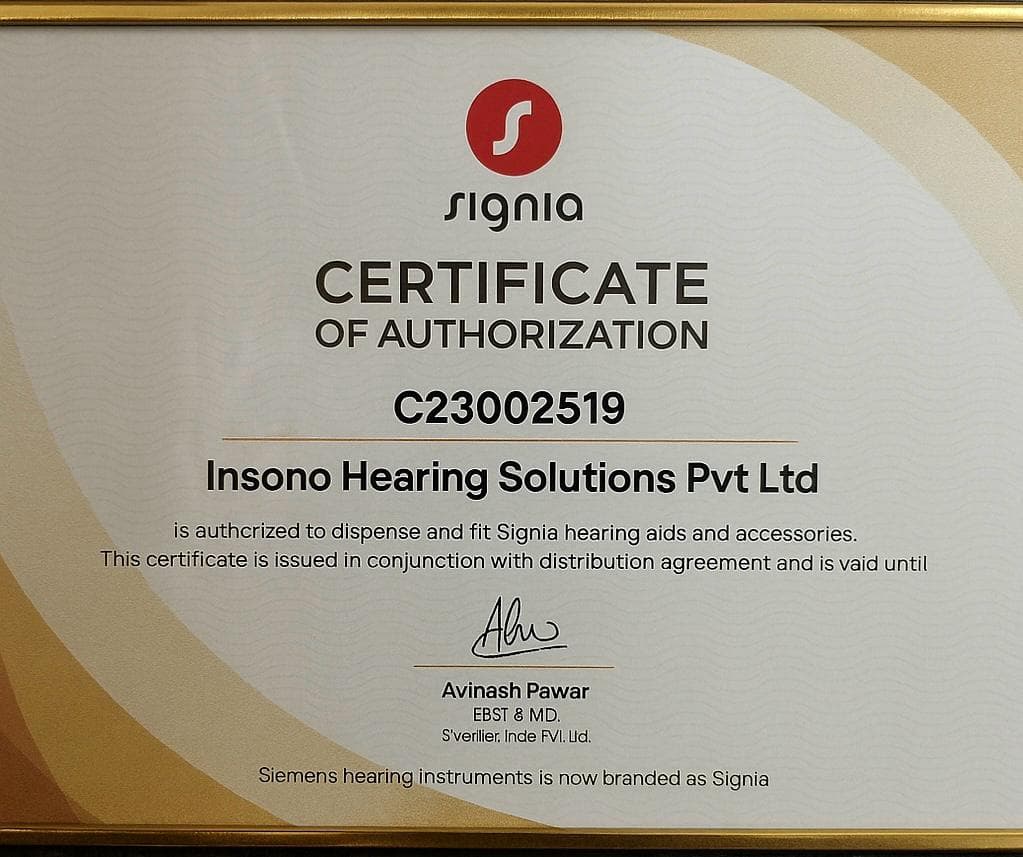
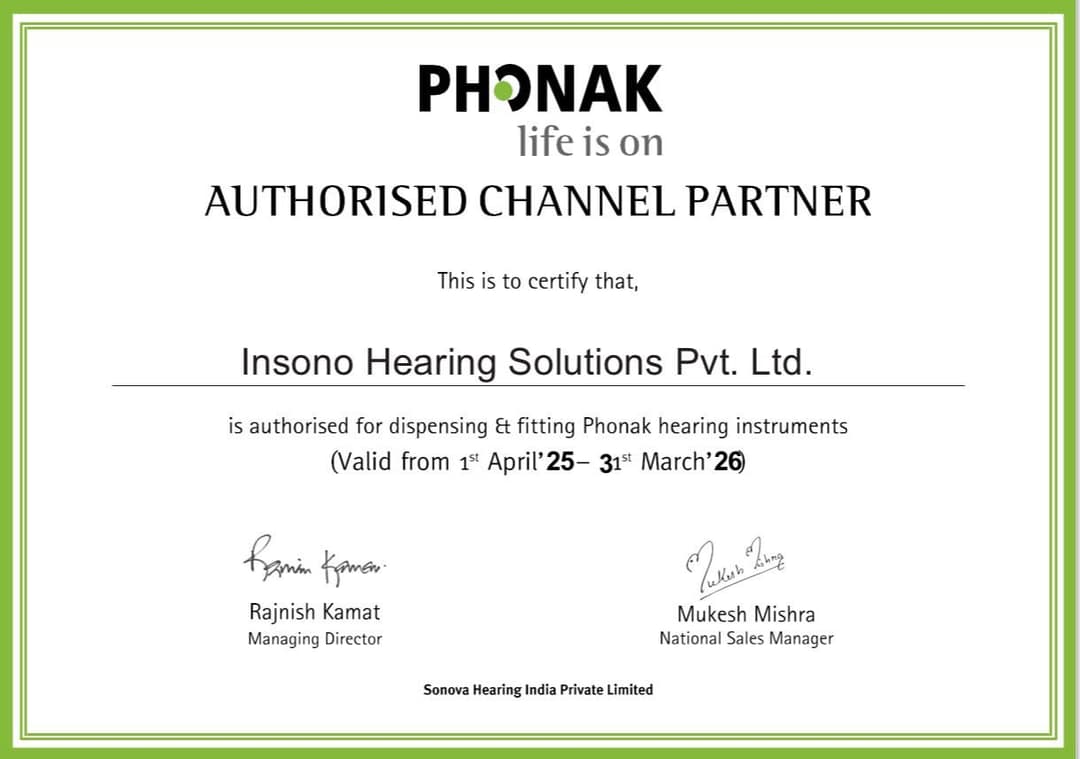
Official Certifications from Widex, Signia & Phonak
Insono Hearing Solutions is an authorized partner for leading global hearing aid brands including Widex, Signia, Phonak, and Oticon. These certifications reflect our trusted expertise and commitment to world-class hearing care in India.

Discover the Different Types of Hearing Aids for Better Hearing
Learn about the latest digital hearing aids, from behind-the-ear (BTE) to completely-in-canal (CIC) devices. Find the right style, features, and comfort level that suit your lifestyle.