Oticon
OTICON GET P In-The-Canal (ITC) Hearing Aid
₹18,000MRP
Technology
Tinnitus MaskingNoise Cancellation
Style
ITC
Available Colors
BrownBlackGreySilverBeigeSnow White
Suitable For
Mild Hearing LossModerate Hearing Loss
✅ Free 3-day home trial·🚚 Cash on delivery·🛡️ Genuine warranty
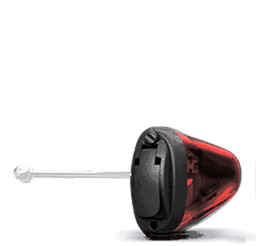
The Oticon GET P In-The-Canal (ITC) Hearing Aid is a compact, digitally programmable custom hearing aid designed for people who want a relatively discreet hearing solution while still requiring useful amplification for everyday communication. The GET family is positioned by Oticon as a basic hearing-care range focused on fundamental benefits such as audibility, open-ear acoustics, directionality and comfort in noisy environments. Oticon's product information confirms that the GET family includes an ITC style.
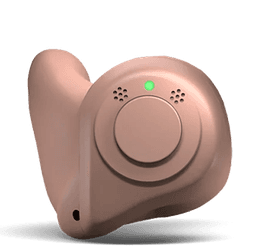
The GET P ITC is particularly relevant for users who prefer an in-the-ear hearing aid rather than a behind-the-ear device. Its housing sits in the ear canal/ear bowl area, making it less noticeable than a conventional BTE hearing aid. At the same time, the ITC format provides more physical space than very small CIC or IIC devices, allowing the instrument to accommodate a larger battery and additional controls or components.
Available Indian technical listings identify the Oticon GET P ITC as a 4-channel, 4-band digital hearing aid, with a listed fitting range of up to approximately 100 dB HL, a Size 312 battery, and approximately 140 hours of listed battery life.
Because the GET is an older/basic Oticon platform, it should be distinguished from newer Oticon custom hearing aids that may provide modern Bluetooth, rechargeable technology and more advanced processing.
Discreet In-The-Canal Design
The most noticeable characteristic of the Oticon GET P is its ITC design.
Unlike a BTE hearing aid, where the main electronics sit behind the ear, an ITC hearing aid is positioned partly inside the ear. This gives the user a more discreet appearance and can be appealing to people who do not want a device visible behind the ear.
The ITC format also provides a useful compromise between size and functionality. A CIC or IIC hearing aid can be smaller, but the reduced physical space can limit certain components and controls. An ITC has more room for the electronics and battery.
The exact size and visibility of the GET P ITC will depend on the user's ear anatomy, degree of hearing loss, required amplification and custom-shell design.
Digital Programmable Technology
The GET P ITC uses digital programmable hearing technology. Digital processing allows the hearing-care professional to adjust the hearing aid according to the individual's hearing test rather than providing a fixed amount of amplification.
This is important because hearing loss varies significantly between people. One person may have relatively good low-frequency hearing but substantial high-frequency loss, while another may require amplification across a much wider frequency range.
During fitting, the audiologist can adjust the hearing aid to provide appropriate amplification for the user's individual hearing profile.
The objective is to improve access to speech and environmental sounds while keeping amplified sound comfortable.
4-Channel / 4-Band Processing
Available product listings identify the GET P ITC as a 4-channel / 4-band hearing aid.
Channels divide the hearing-aid frequency range into separate areas that can be processed and adjusted.
This allows the audiologist to make more individualized adjustments than would be possible with a basic single-band amplifier.
Four-channel processing can help the professional manage different parts of the frequency range according to the user's hearing loss.
The number of channels alone does not determine the quality of a hearing aid. Correct programming, appropriate acoustic coupling and the user's hearing ability are equally important.
Power-Oriented ITC Configuration
The GET P ITC is the power-oriented ITC configuration within the GET family.
Available Indian specifications list the GET P ITC with a fitting range of approximately 100 dB HL.
This indicates that the model is intended to provide substantially more amplification than a very low-power custom hearing aid.
However, the stated fitting range should not be interpreted as a guarantee that the hearing aid will be suitable for every hearing loss up to that level.
The audiologist should consider the complete audiogram, speech discrimination, hearing-aid output requirements, ear anatomy and the user's listening needs before recommending the model.
Open-Ear Acoustics
Oticon identifies Open Ear Acoustics as one of the fundamental benefits of the GET family.
Open-ear acoustics are designed to allow appropriate natural sound to reach the ear while the hearing aid supplies amplification where it is needed.
This approach can be useful for certain hearing losses because it may help maintain a more natural sensation for environmental sounds.
However, an open fitting is not appropriate for every hearing loss. Users with greater low-frequency hearing loss may need a more closed fitting to achieve adequate amplification and reduce the possibility of feedback.
The audiologist should determine the appropriate acoustic configuration.
Directional Microphone Technology
Directionality is another core feature of the Oticon GET family. Oticon specifically describes the GET family as offering audibility with open-ear acoustics and directionality, together with comfort in noisy environments.
Directional microphones are designed to help the hearing aid focus more strongly on sounds coming from a particular direction while reducing the influence of some sounds arriving from other directions.
This can be helpful when the user is trying to follow a conversation while background noise is present.
For example, during a conversation at a dining table, the hearing aid may be able to prioritize the person speaking in front of the wearer.
Directionality does not remove all background noise, and its effectiveness depends on the acoustic environment and hearing-aid programming.
Noise Management
The GET family includes technology intended to improve comfort in noisy environments.
Background noise can make communication difficult for people with hearing loss, particularly in environments such as:
Restaurants
Family gatherings
Markets
Offices
Public spaces
Social functions
Busy homes
Outdoor environments
Noise-management processing is designed to reduce the impact of unwanted sounds while preserving useful auditory information.
It is important to understand that a hearing aid cannot completely eliminate background noise. Instead, noise-management features are intended to make listening more manageable.
Dynamic Feedback Cancellation
The GET platform includes Dynamic Feedback Cancellation, with Oticon documentation identifying DFC2 among the platform's features.
Feedback is the whistling or squealing sound sometimes produced by a hearing aid when amplified sound escapes from the ear and is picked up again by the microphone.
Feedback can happen when:
The hearing aid is not correctly fitted
The earwax level changes
The wearer places a hand close to the hearing aid
The acoustic coupling is too open
The hearing aid requires substantial amplification
Dynamic feedback cancellation is designed to reduce this unwanted sound and help maintain comfortable amplification.
Correct physical fitting remains essential even when feedback-cancellation technology is available.
Multiple Listening Programs
The GET platform supports multiple listening programs, with Oticon's product information listing up to four user programs for the family.
Programs can be configured by the audiologist for different listening environments.
Depending on the individual fitting, programs may be set up for:
General everyday hearing
Speech in noise
Quiet environments
Other specific listening situations
The available programs and their functions can differ according to the exact configuration.
Automatic Sound Adjustment
The GET platform is designed to provide automatic management of relevant hearing-aid functions as listening conditions change.
This can be useful for people who do not want to manually adjust their hearing aid frequently.
For example, a person may move from a quiet home environment into a busier outdoor environment. Automatic processing can help manage the changing acoustic conditions.
The audiologist can determine how the available automatic features should be configured.
Speech Understanding and Everyday Communication
The primary purpose of the GET P ITC is to provide useful amplification that can support communication.
When appropriately fitted, the hearing aid can help users access speech in everyday situations such as:
One-to-one conversations: Amplification can make conversational speech more accessible.
Family communication: Improved audibility can make it easier to participate in discussions at home.
Television: Appropriate amplification can help users hear dialogue more comfortably.
Social situations: Directionality and noise management can assist in environments where competing sounds are present.
Workplace communication: The device can provide hearing support during suitable meetings and conversations.
The level of benefit varies according to hearing loss, speech understanding, environment and fitting.
Wind Noise Management
Available GET-family information identifies features intended to manage environmental noise, including wind-related noise in applicable configurations.
Wind can create significant noise at hearing-aid microphones when a person is outdoors.
Wind-noise management can help reduce the impact of this unwanted sound and make outdoor listening more comfortable.
The hearing aid should nevertheless be protected from excessive moisture and environmental exposure.
Tinnitus Support
The broader GET platform is also associated with tinnitus-management options in available product information.
Tinnitus refers to the perception of sounds such as ringing or buzzing without an external source.
Where a tinnitus-support feature is available in the exact configuration, it may be used as part of a broader tinnitus-management approach.
It should not be described as a cure for tinnitus. Persistent, sudden or troublesome tinnitus should be assessed by an appropriate healthcare professional.
Telecoil
The GET family includes telecoil functionality/options.
A telecoil can be useful when the user visits a location equipped with a compatible hearing-loop system.
Hearing loops may be available in some:
Theatres
Auditoriums
Places of worship
Conference rooms
Public venues
When the hearing aid and loop system are compatible, the telecoil can receive the transmitted signal and provide it through the hearing aid.
The availability of telecoil depends on the exact instrument configuration.
DAI and FM Options
Oticon's GET product information also identifies DAI and FM options within the family.
DAI stands for Direct Audio Input and can allow compatible external audio sources to be connected directly to the hearing-aid system.
FM systems can provide transmitted audio from a compatible external transmitter to a hearing-aid receiver.
These functions are more specialized and are not required by every hearing-aid wearer.
Battery: Size 312
The GET P ITC uses a Size 312 replaceable battery.
Available Indian specifications list approximately 140 hours of battery life.
Actual battery performance varies according to:
Daily wearing time
Degree of hearing loss
Amplification settings
Listening environment
Feature usage
Battery quality
A replaceable battery can be convenient for people who prefer traditional battery-powered hearing aids.
Users should carry spare batteries when travelling or spending long periods away from home.
Is It Rechargeable?
The GET P ITC is not a rechargeable hearing aid in the documented configuration.
It uses a replaceable Size 312 battery.
Customers specifically looking for a rechargeable hearing aid should be considered for newer Oticon models designed with rechargeable technology.
Bluetooth Connectivity
The Oticon GET P ITC should not be advertised as a modern Bluetooth streaming hearing aid unless the exact configuration has been independently verified.
The GET is an older/basic Oticon family. Current Oticon custom hearing aids can provide substantially different connectivity features. For example, Oticon's newer Own ITC offers optional Bluetooth Low Energy connectivity and direct streaming on compatible devices.
Therefore, customers looking for smartphone calls, music streaming or direct smartphone connectivity should be evaluated for a newer compatible model.
Custom ITC Fit
An ITC hearing aid is generally made or configured to fit the individual's ear.
A good custom fit is important for:
Comfort
Retention
Sound delivery
Feedback management
Overall hearing-aid performance
The final size and appearance depend on the user's ear anatomy and the amplification requirements.
People with smaller ear canals may require a different custom style if there is insufficient space for the required components.
Discreet Appearance
One of the main reasons customers choose an ITC hearing aid is its discreet appearance.
The hearing aid sits within the ear rather than behind it. Only part of the device may be visible depending on the ear shape and the size of the required shell.
Compared with a conventional BTE hearing aid, this can provide a more concealed appearance.
However, customers should understand that discreet does not mean completely invisible. ITC devices are larger than IIC hearing aids.
Ease of Handling
Compared with extremely small CIC and IIC devices, an ITC can be easier for some users to handle.
The larger housing may provide space for:
Battery compartment
Push-button controls where configured
Removal grip
Other hearing-aid components
This can be useful for older adults who have difficulty handling very small hearing aids.
Professional Hearing Assessment
The Oticon GET P ITC should be selected following a proper hearing evaluation.
The audiologist should assess:
Degree of hearing loss
Type of hearing loss
Hearing thresholds
Speech understanding
Ear health
Ear-canal size
Lifestyle
Communication requirements
Previous hearing-aid experience
The hearing aid can then be programmed according to the user's hearing profile.
Professional Programming and Fine-Tuning
Initial fitting is only one part of the hearing-aid process.
After wearing the device for some time, the user may notice that:
Certain sounds are too loud
Voices sound different
Background noise is noticeable
The device needs additional volume
Some environments are difficult
These concerns can often be addressed through professional fine-tuning.
Follow-up appointments are therefore an important part of successful hearing-aid use.
Maintenance
Regular maintenance is important for reliable performance.
Users should keep the hearing aid clean and protect it from excessive moisture, heat and physical damage.
The sound outlet and microphone openings should be checked regularly.
Earwax can affect the performance of custom hearing aids. If the sound becomes weak or distorted, the device should be inspected rather than assuming that the hearing aid has developed an electronic fault.
Professional service may be required if the user experiences:
Weak sound
Intermittent output
Distorted sound
Feedback
Battery problems
Physical damage
Who Can Consider the Oticon GET P ITC?
The GET P ITC can be considered by people who prefer:
A discreet custom hearing aid
An ITC rather than a BTE design
Digital programmable amplification
A power-oriented ITC configuration
Replaceable batteries
Directional processing
Noise-management features
Feedback cancellation
Multiple listening programs
Professional audiologist programming
It may be particularly relevant for customers who want a relatively discreet hearing aid but do not require modern Bluetooth or rechargeable functionality.
Technical Specifications
Specification Oticon GET P ITC
Brand Oticon
Family Oticon GET
Model GET P ITC
Style In-The-Canal (ITC)
Technology Digital / Programmable
Channels 4
Bands 4
Fitting Range Up to approximately 100 dB HL
Battery Size 312
Listed Battery Life Approximately 140 hours
Directionality Yes
Noise Management Yes
Open Ear Acoustics GET family feature
Feedback Management Yes
Dynamic Feedback Cancellation DFC2 platform feature
Listening Programs Up to 4 in GET family
Telecoil Available within GET family
DAI Available within GET family
FM Available within GET family
Tinnitus Support Available in applicable configurations
Rechargeable No
Bluetooth Not to be assumed
Main Advantage Discreet custom digital hearing support
The channel/band configuration, fitting range and battery specifications above are supported by available Indian product listings, while Oticon's own GET documentation confirms the family-level ITC style and core features such as open-ear acoustics, directionality and noise comfort.
Final Overview
The Oticon GET P In-The-Canal (ITC) Hearing Aid is a compact, custom-style digital hearing solution intended for users who want a relatively discreet hearing aid while requiring meaningful amplification and practical sound-management features.
Its principal features include 4-channel/4-band digital processing, a power-oriented ITC configuration, approximately 100 dB HL listed fitting range, directional processing, noise-management support, Open Ear Acoustics, feedback cancellation, multiple listening programs and a Size 312 replaceable battery.
The ITC design places the device within the ear rather than behind the ear, offering a balance between discreetness and functionality. The larger physical format compared with CIC or IIC instruments can provide useful space for components and battery operation.
The GET P ITC should be professionally selected and programmed according to the individual's hearing test. The published fitting range is a technical specification and should not be treated as a guarantee of suitability for a particular hearing loss.
For customers looking for a straightforward, discreet, battery-powered digital hearing aid without requiring modern Bluetooth or rechargeable features, the GET P ITC represents the relevant type of Oticon GET configuration. Current Oticon custom models should be considered separately when smartphone streaming, Bluetooth connectivity or rechargeable operation is specifically required.
More Oticon Hearing Aids
OTICON GO PRO D VC / GO PRO D Behind-The-Ear (BTE) Hearing Aid
OTICON GO PRO POWER D Behind-The-Ear (BTE) Hearing Aid
OTICON GO PRO D In-The-Canal (ITC) Hearing Aid
OTICON GO PRO In-The-Canal (ITC) Hearing Aid
OTICON GO PRO PB Completely-In-Canal (CIC) Hearing Aid
OTICON GO PRO PB POWER Behind-The-Ear (BTE) Hearing Aid
OTICON GO PRO D VC / GO PRO D Behind-The-Ear (BTE) Hearing Aid
OTICON GO PRO POWER D Behind-The-Ear (BTE) Hearing Aid
OTICON GO PRO D In-The-Canal (ITC) Hearing Aid
OTICON GO PRO In-The-Canal (ITC) Hearing Aid
OTICON GO PRO PB Completely-In-Canal (CIC) Hearing Aid
OTICON GO PRO PB POWER Behind-The-Ear (BTE) Hearing Aid
Frequently Asked Questions
What is a Oticon hearing aid?▼
Oticon is a world-leading hearing aid brand known for its advanced technology, exceptional sound quality, and reliability. The OTICON GET P In-The-Canal (ITC) Hearing Aid is one of their premium models designed to help people with hearing loss experience clear, natural sound.
What technology does the OTICON GET P In-The-Canal (ITC) Hearing Aid use?▼
The OTICON GET P In-The-Canal (ITC) Hearing Aid features Tinnitus Masking, Noise Cancellation. These technologies work together to deliver outstanding clarity, comfort, and connectivity for the wearer.
What is the style and shape of the OTICON GET P In-The-Canal (ITC) Hearing Aid?▼
The OTICON GET P In-The-Canal (ITC) Hearing Aid is available in ITC style(s). This style balances comfort, discretion, and performance.
What level of hearing loss is the OTICON GET P In-The-Canal (ITC) Hearing Aid suitable for?▼
The OTICON GET P In-The-Canal (ITC) Hearing Aid is recommended for individuals with Mild Hearing Loss, Moderate Hearing Loss. We advise getting a professional hearing assessment to confirm the best solution for your specific needs.
What is the price of the OTICON GET P In-The-Canal (ITC) Hearing Aid?▼
The OTICON GET P In-The-Canal (ITC) Hearing Aid is priced at ₹18,000. Insono Hearing offers flexible EMI options and financing. Contact us for the latest offers and to schedule a free trial.
Where can I get a free trial of the OTICON GET P In-The-Canal (ITC) Hearing Aid in India?▼
Insono Hearing offers free trials for the OTICON GET P In-The-Canal (ITC) Hearing Aid at our clinics. Book an appointment online or call us to experience the device before making a decision.
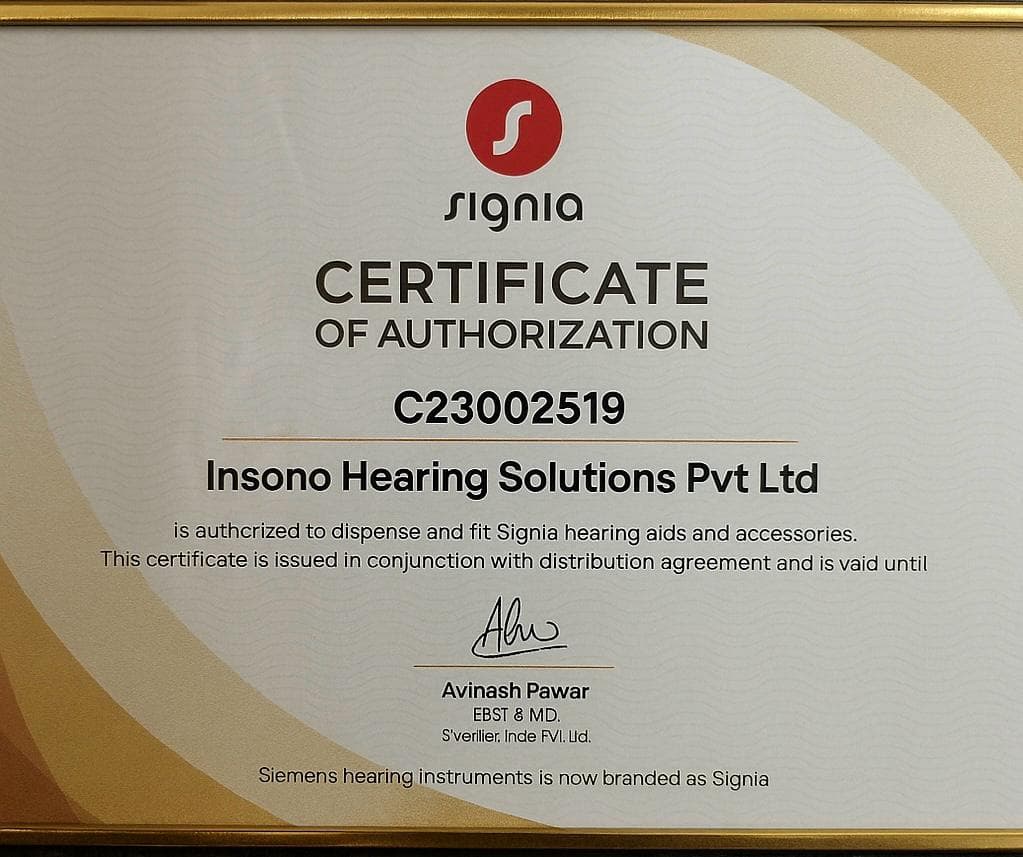
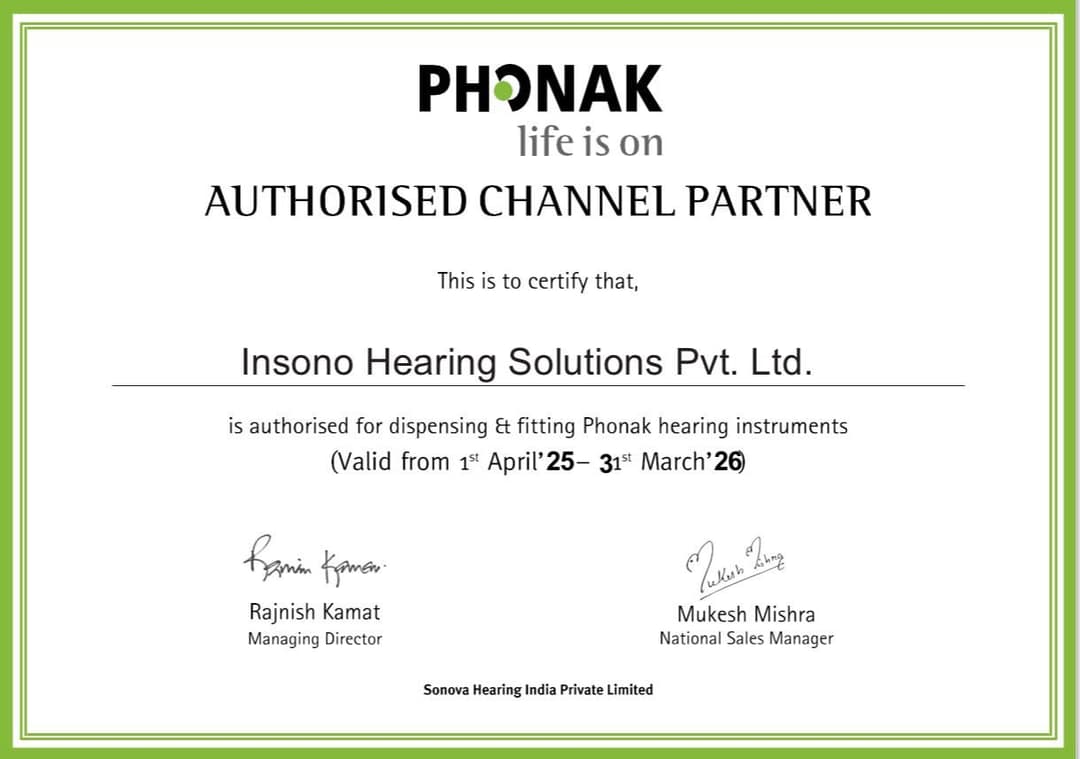
Official Certifications from Widex, Signia & Phonak
Insono Hearing Solutions is an authorized partner for leading global hearing aid brands including Widex, Signia, Phonak, and Oticon. These certifications reflect our trusted expertise and commitment to world-class hearing care in India.

Discover the Different Types of Hearing Aids for Better Hearing
Learn about the latest digital hearing aids, from behind-the-ear (BTE) to completely-in-canal (CIC) devices. Find the right style, features, and comfort level that suit your lifestyle.