Oticon
OTICON D P In-The-Canal (ITC) Hearing Aid
₹18,000MRP
Technology
Noise CancellationTinnitus Masking
Style
ITC
Available Colors
BlackSandy BrownBrownGreySilverBeigeDark Champagne
Suitable For
Mild Hearing LossModerate Hearing Loss
✅ Free 3-day home trial·🚚 Cash on delivery·🛡️ Genuine warranty
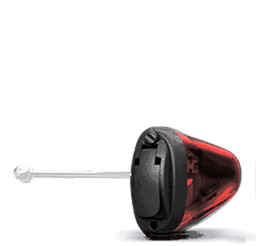
The Oticon D P ITC is a digitally programmable In-The-Canal (ITC) hearing aid designed for people who want a compact, custom-fit hearing solution while still requiring useful amplification and essential digital sound-processing features. The model is associated with Oticon's earlier-generation digital hearing-aid platforms, including the GET D P ITC configuration. Available technical listings identify the GET D P ITC as a 4-channel/4-band digital ITC hearing aid, using a Size 312 battery and offering a fitting range of up to approximately 100 dB HL.
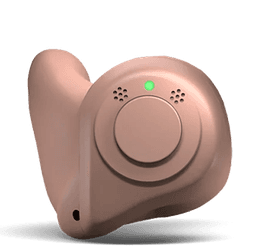
Its ITC construction allows the hearing aid to sit partly inside the ear canal rather than behind the ear. This provides a more discreet appearance than a conventional BTE hearing aid while retaining physical space for amplification components, controls and a replaceable battery.
The Oticon D P ITC is designed around practical everyday hearing needs, including speech audibility, listening comfort, management of background noise and feedback control. Depending on the exact generation and configuration, the platform also supports features such as directional processing, tinnitus-management options, telecoil/DAI-related functionality and multiple listening programs.
Because this is an older-generation Oticon model, customers should distinguish it from current Oticon hearing aids that may offer advanced Bluetooth, rechargeable batteries and newer sound-processing platforms.
What Does Oticon D P ITC Mean?
The product name describes the basic configuration:
D refers to the digital/programmable hearing-aid platform.
P refers to the power-oriented configuration, intended to provide greater amplification capability than a standard low-power ITC configuration.
ITC means In-The-Canal. The hearing aid is custom-made or configured to fit within the ear and ear canal area, making it less visible than many behind-the-ear hearing aids.
Available product documentation and Indian hearing-aid price lists identify the GET D P ITC as a 4-channel/4-band ITC model with a fitting range of up to approximately 100 dB HL, a Size 312 battery, and approximately 140 hours of listed battery life.
Custom In-The-Canal Design
One of the main advantages of the Oticon D P ITC is its In-The-Canal design.
Instead of placing the complete hearing-aid housing behind the ear, the ITC model sits partly within the ear. This makes the device more discreet and can be appealing to users who prefer not to wear a conventional BTE hearing aid.
A custom ITC hearing aid can be manufactured according to the shape of the user's ear. Proper ear impressions and professional fitting are therefore important for comfort, stability and appropriate sound delivery.
The final appearance can vary from person to person because every ear has a different shape and size.
The ITC design also provides a practical balance between discretion and functionality. Compared with extremely small CIC or IIC hearing aids, an ITC has more physical space for components and controls.
Digital Sound Processing
The Oticon D P ITC uses digital signal processing to process incoming sounds before delivering amplified sound to the ear.
Digital processing allows the hearing aid to modify sound according to the user's hearing requirements rather than simply increasing the volume of every sound equally.
This can be important for people who have different degrees of hearing loss across different frequencies.
For example, a person may hear low-frequency sounds reasonably well but have difficulty understanding high-frequency speech information. Professional programming can adjust amplification according to the individual's audiogram.
The hearing aid therefore needs to be programmed by an audiologist or hearing-care professional rather than being treated as a universal amplification device.
4-Channel / 4-Band Technology
Technical listings for the Oticon GET D P ITC identify the model as having 4 channels and 4 bands.
Channels allow the hearing professional to manage amplification across different portions of the frequency range.
This provides greater flexibility than a very basic single-band amplification system.
The audiologist can use the available fitting controls to adjust the hearing aid according to:
The user's audiogram
Degree of hearing loss
Speech understanding
Listening comfort
Environmental requirements
Individual preferences
The number of channels should not be interpreted as a direct measurement of sound quality. Proper fitting and programming remain extremely important.
Power Amplification
The P configuration is intended to provide stronger amplification capability compared with a standard low-power ITC configuration.
Available technical information for the GET D P ITC lists a fitting range of approximately 100 dB HL.
This makes the model potentially suitable for users requiring more amplification while still preferring the relatively compact ITC format.
However, a published fitting range does not mean that every person with hearing loss up to that level will be an appropriate candidate.
The audiologist should evaluate the complete audiogram, speech discrimination, ear anatomy and required gain before recommending the device.
Noise Management
The Oticon D P ITC platform incorporates noise-management technology designed to help manage unwanted background sounds.
Background noise is a common difficulty for people with hearing loss. Restaurants, family gatherings, markets, offices and other social environments may contain several competing sound sources.
Noise-management processing can reduce the prominence of certain unwanted sounds while maintaining useful auditory information.
The purpose is not to eliminate all background noise. Natural environments contain many sounds, and removing too much environmental information can also be undesirable.
Instead, the hearing aid is designed to make challenging listening environments more manageable.
Directional Microphone Technology
Directional processing is another useful feature associated with the Oticon digital platform.
When a person is having a conversation in a noisy environment, sounds can arrive from multiple directions. Directional microphone processing can help the hearing aid focus more strongly on sounds coming from the relevant direction.
This may help the wearer concentrate on a speaker in situations such as:
Family conversations
Small gatherings
Restaurants
Meetings
Social events
Conversations in moderately noisy surroundings
The effectiveness of directionality depends on the acoustic environment, speaker position and hearing-aid programming.
Automatic Directionality
Available documentation for the Oticon GET/Tego-era platform identifies automatic directionality among its sound-processing capabilities. The system can change directional behavior according to the listening environment rather than requiring the user to manually control every adjustment.
This can make operation easier, particularly for users who prefer a hearing aid that automatically adapts to changing listening situations.
Dynamic Feedback Cancellation
The hearing aid platform also incorporates Dynamic Feedback Cancellation, including DFC2 in documented configurations.
Feedback is the high-pitched whistling sound that can occur when amplified sound escapes from the ear and is picked up again by the hearing-aid microphone.
Feedback can be more likely when:
The hearing aid is not fitted correctly
The ear mould or shell does not provide an appropriate seal
The wearer places a hand near the hearing aid
The hearing aid requires significant amplification
Earwax affects the fitting
Dynamic feedback cancellation is designed to help control this unwanted whistling and improve listening comfort.
A correctly fitted custom shell remains essential even when feedback cancellation is available.
Speech Focus
Some product listings for the GET D P ITC identify Speech Focus as one of the available features.
Speech-focused processing is intended to help prioritize speech information in situations where other sounds are present.
This is particularly relevant because the primary reason many people wear hearing aids is to communicate more effectively with other people.
The hearing aid cannot guarantee perfect speech understanding in every noisy environment, but appropriate speech-focused processing and professional fitting can support communication.
Wind Noise Reduction
Available specifications for the GET D P ITC also identify wind-noise reduction.
Wind can create substantial unwanted microphone noise when the wearer is outdoors.
Wind-noise management is intended to reduce the impact of this sound so that outdoor listening can be more comfortable.
This can be useful when walking outside, travelling or participating in other outdoor activities.
Feedback Cancellation
In addition to dynamic feedback management, available product listings specifically identify feedback cancellation as a feature of the GET D P ITC.
The purpose is to maintain stable amplification while reducing the likelihood of irritating whistling.
For customers who previously experienced feedback from older hearing aids, professional fitting is particularly important.
Tinnitus Masking
The Oticon D P ITC is also associated in available product listings with tinnitus-management/masking functionality.
Tinnitus is the perception of sound such as ringing or buzzing without an external sound source.
A tinnitus-support feature may provide a generated sound intended to help some users manage their perception of tinnitus.
However, tinnitus management should not be presented as a medical cure. Anyone experiencing persistent, sudden or troublesome tinnitus should seek appropriate medical and audiological assessment.
Multiple Listening Programs
The Oticon D P ITC can support multiple listening programs depending on the exact configuration and programming.
Available product information for the platform identifies up to four user programs.
Different programs can be configured for different listening situations.
For example, a professional may configure programs for:
Everyday listening
Noisy environments
Speech-focused listening
Music or other specific situations
The exact number and purpose of programs depend on the individual device and professional programming.
Automatic Environment Adjustment
The Oticon platform associated with these models includes automatic processing designed to recognize changes in the listening environment and adjust relevant sound-processing features.
This reduces the need for the user to manually change settings throughout the day.
For an elderly user, this can be especially convenient because the hearing aid can perform many adjustments automatically.
Nevertheless, individual preferences and hearing requirements can differ, so professional programming remains important.
Battery and Daily Use
The GET D P ITC is listed with a Size 312 zinc-air battery. Indian technical listings specify approximately 140 hours of battery life for the GET D P ITC, although actual battery life varies according to use and programming.
Battery life can be affected by:
Daily wearing time
Degree of hearing loss
Amplification level
Sound-processing activity
Environmental conditions
Battery quality
A replaceable Size 312 battery can be convenient because users can replace the battery rather than needing to recharge the hearing aid.
Users should carry a spare battery when travelling or spending long periods away from home.
Discreet Appearance
An important benefit of the ITC format is its relatively discreet appearance.
The device is positioned partly inside the ear, reducing the amount of hardware visible from behind compared with a traditional BTE.
This can be attractive to people who want hearing assistance while maintaining a less noticeable appearance.
However, visibility varies depending on the individual's ear anatomy and the size of the required electronics.
A power-oriented ITC may need a larger shell than a basic low-power ITC because additional space is required for the components and amplification capability.
Custom Fit and Comfort
Because ITC hearing aids are designed around the ear's anatomy, the shell can provide a more personalized fit than universal hearing devices.
A good custom fit can help the device remain stable during normal activities and can also help deliver amplified sound appropriately.
Comfort is influenced by:
Ear-canal shape
Shell design
Venting
Hearing-loss requirements
Earwax
Individual sensitivity
Correct impression and manufacturing
If the hearing aid feels uncomfortable, causes irritation or does not remain securely positioned, the user should have the device checked and adjusted by the hearing professional.
Telecoil and Additional Connectivity Options
Depending on the exact configuration, the Oticon platform offers options such as telecoil, DAI and FM compatibility. Available technical listings for the broader platform identify DAI and FM options.
A telecoil can be useful with compatible hearing-loop systems installed in certain public locations.
DAI, or Direct Audio Input, provides a method of receiving audio from compatible external equipment.
FM systems can provide transmitted audio in environments where compatible FM equipment is available.
These functions are more specialized than standard everyday hearing amplification.
Open-Ear Acoustics
Open-ear acoustic options are associated with the Oticon platform, although the suitability of an open fitting depends on the hearing loss and the exact configuration.
Open fittings allow some natural sound to enter the ear while the hearing aid provides amplification.
For people with appropriate hearing profiles, this can help preserve a more natural sensation for sounds that do not require significant amplification.
However, users with greater hearing loss may require a more closed acoustic coupling to achieve sufficient amplification and avoid feedback.
DAI and FM Compatibility
For users who require specialized audio-input solutions, the platform supports DAI and FM options in documented configurations.
This can be particularly useful for users who require direct access to an external audio signal.
These options may be relevant in educational, professional or specialized listening environments.
The audiologist should verify compatibility with the particular accessory before purchase.
Is Oticon D P ITC Rechargeable?
The documented GET D P ITC configuration uses a replaceable Size 312 battery, rather than an integrated rechargeable lithium-ion battery.
Therefore, it should not be advertised as a rechargeable hearing aid.
Users who specifically want a rechargeable hearing aid should consider newer Oticon product families designed with rechargeable technology.
Does It Have Bluetooth?
The Oticon D P ITC/GET D P ITC is an older-generation device and should not be marketed as a modern Bluetooth streaming hearing aid unless the exact device configuration has been verified separately.
Newer Oticon hearing aids have substantially different connectivity capabilities.
Therefore, customers looking for:
Bluetooth calling
Direct music streaming
Smartphone audio streaming
Smartphone app control
should be evaluated for a newer compatible hearing-aid platform.
This distinction is particularly important when creating online product descriptions.
Who Is the Oticon D P ITC Suitable For?
The device may be considered for people who:
Prefer a discreet ITC hearing aid
Want a custom-fit hearing solution
Need digital programmable amplification
Want more amplification than a basic low-power ITC
Prefer replaceable batteries
Need support for everyday speech communication
Want noise-management features
Want feedback-control technology
Prefer automatic sound adjustments
Do not require modern Bluetooth connectivity
Want an economical alternative to newer premium hearing aids
The actual suitability should be confirmed using a hearing assessment.
Everyday Situations
When properly fitted, the Oticon D P ITC can be used in a variety of everyday situations.
Conversations at Home
The hearing aid can provide amplification for conversations with family members, helping make voices more audible.
Television
Appropriate amplification may help users hear television dialogue more comfortably without requiring excessive television volume.
Social Gatherings
Directional and noise-management features can be useful when several people are speaking or when background sound is present.
Outdoor Listening
Wind-noise management can help reduce the impact of wind-generated microphone noise.
Workplace Communication
For suitable users, the hearing aid can support communication during meetings and one-to-one discussions.
Professional Hearing-Aid Fitting
The Oticon D P ITC should be professionally fitted.
A typical fitting process may include:
Hearing evaluation
Ear examination where appropriate
Audiogram assessment
Selection of appropriate hearing-aid model
Ear impression for custom ITC construction where required
Initial programming
Physical fitting
Speech and comfort verification
User instruction
Follow-up fine-tuning
Professional follow-up is particularly important for custom ITC hearing aids.
Maintenance and Care
Users should take appropriate care of the device to maintain performance.
The hearing aid should be protected from excessive moisture, water, heat and physical impact.
The sound outlet and microphone openings should be kept clean according to the manufacturer's instructions.
Earwax can significantly affect hearing-aid performance. If sound becomes weak or distorted, the device should be checked rather than immediately assuming that the electronics have failed.
Professional servicing may be required if there is:
Weak sound
Intermittent sound
Whistling
Distortion
Battery-contact problems
Physical damage
Technical Specifications
Specification Oticon D P / GET D P ITC
Brand Oticon
Product Family GET / related Oticon digital platform
Model D P ITC
Style In-The-Canal (ITC)
Technology Digital / Programmable
Channels 4
Bands 4
Fitting Range Up to approximately 100 dB HL
Battery Size 312
Listed Battery Life Approximately 140 hours
Directionality Supported
Automatic Directionality Supported on platform
Noise Management Supported
Feedback Cancellation Supported
Dynamic Feedback Cancellation DFC2
Speech Focus Available in documented configuration
Wind Noise Reduction Available in documented configuration
Tinnitus Support Available in documented configuration
Listening Programs Up to 4 depending on configuration
DAI Option available
FM Option available
Open Ear Acoustics Platform support
Bluetooth Not to be assumed
Rechargeable No; Size 312 replaceable battery
Form Factor Custom/ITC
Primary Benefit Discreet digital amplification with practical sound-management features
The 4-channel/4-band architecture, approximately 100 dB HL fitting range and Size 312 battery are documented in available Oticon product-price and specification listings.
Final Overview
The Oticon D P In-The-Canal (ITC) Hearing Aid is a compact digital hearing solution designed for users who want a more discreet alternative to a traditional behind-the-ear hearing aid while retaining useful amplification and sound-processing capabilities.
Its key features include digital programmable processing, 4-channel/4-band technology, power-oriented amplification, noise management, directional processing, automatic environmental adjustment, feedback cancellation, Dynamic Feedback Cancellation, speech-focused processing, wind-noise management, multiple programs and tinnitus-support options in applicable configurations.
The Size 312 replaceable battery makes the device practical for users who prefer conventional battery operation, while its ITC construction provides a relatively discreet appearance.
For customers considering this model, the most important step is a proper hearing assessment and professional fitting. The audiologist should confirm that the device provides sufficient amplification for the user's hearing loss and determine whether an ITC shell, venting and available power are appropriate.
Because the D P ITC belongs to an older Oticon generation, it is best positioned as a practical digital hearing-aid option rather than a modern Bluetooth/rechargeable premium device. Its appeal lies primarily in its compact custom form, programmable amplification and essential hearing-support features.
More Oticon Hearing Aids
OTICON GO PRO D VC / GO PRO D Behind-The-Ear (BTE) Hearing Aid
OTICON GO PRO POWER D Behind-The-Ear (BTE) Hearing Aid
OTICON GO PRO D In-The-Canal (ITC) Hearing Aid
OTICON GO PRO In-The-Canal (ITC) Hearing Aid
OTICON GO PRO PB Completely-In-Canal (CIC) Hearing Aid
OTICON GO PRO PB POWER Behind-The-Ear (BTE) Hearing Aid
OTICON GO PRO D VC / GO PRO D Behind-The-Ear (BTE) Hearing Aid
OTICON GO PRO POWER D Behind-The-Ear (BTE) Hearing Aid
OTICON GO PRO D In-The-Canal (ITC) Hearing Aid
OTICON GO PRO In-The-Canal (ITC) Hearing Aid
OTICON GO PRO PB Completely-In-Canal (CIC) Hearing Aid
OTICON GO PRO PB POWER Behind-The-Ear (BTE) Hearing Aid
Frequently Asked Questions
What is a Oticon hearing aid?▼
Oticon is a world-leading hearing aid brand known for its advanced technology, exceptional sound quality, and reliability. The OTICON D P In-The-Canal (ITC) Hearing Aid is one of their premium models designed to help people with hearing loss experience clear, natural sound.
What technology does the OTICON D P In-The-Canal (ITC) Hearing Aid use?▼
The OTICON D P In-The-Canal (ITC) Hearing Aid features Noise Cancellation, Tinnitus Masking. These technologies work together to deliver outstanding clarity, comfort, and connectivity for the wearer.
What is the style and shape of the OTICON D P In-The-Canal (ITC) Hearing Aid?▼
The OTICON D P In-The-Canal (ITC) Hearing Aid is available in ITC style(s). This style balances comfort, discretion, and performance.
What level of hearing loss is the OTICON D P In-The-Canal (ITC) Hearing Aid suitable for?▼
The OTICON D P In-The-Canal (ITC) Hearing Aid is recommended for individuals with Mild Hearing Loss, Moderate Hearing Loss. We advise getting a professional hearing assessment to confirm the best solution for your specific needs.
What is the price of the OTICON D P In-The-Canal (ITC) Hearing Aid?▼
The OTICON D P In-The-Canal (ITC) Hearing Aid is priced at ₹18,000. Insono Hearing offers flexible EMI options and financing. Contact us for the latest offers and to schedule a free trial.
Where can I get a free trial of the OTICON D P In-The-Canal (ITC) Hearing Aid in India?▼
Insono Hearing offers free trials for the OTICON D P In-The-Canal (ITC) Hearing Aid at our clinics. Book an appointment online or call us to experience the device before making a decision.
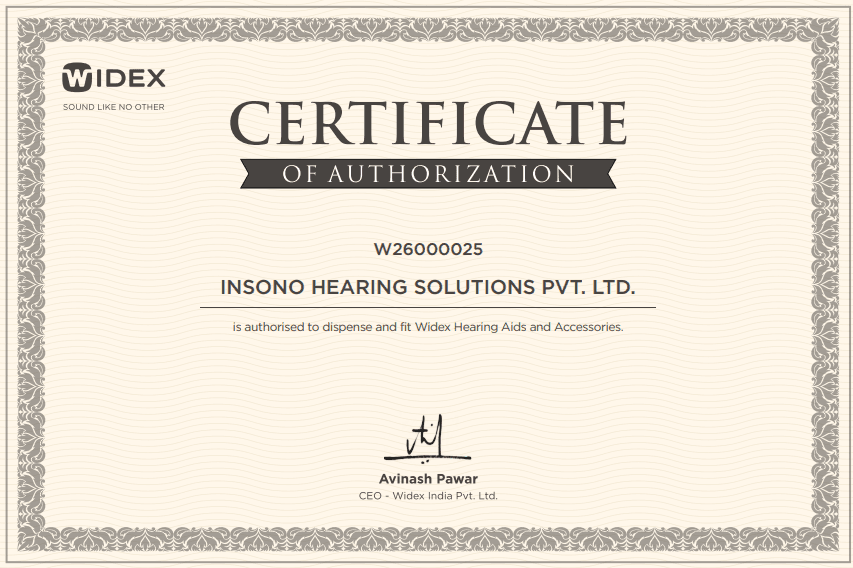
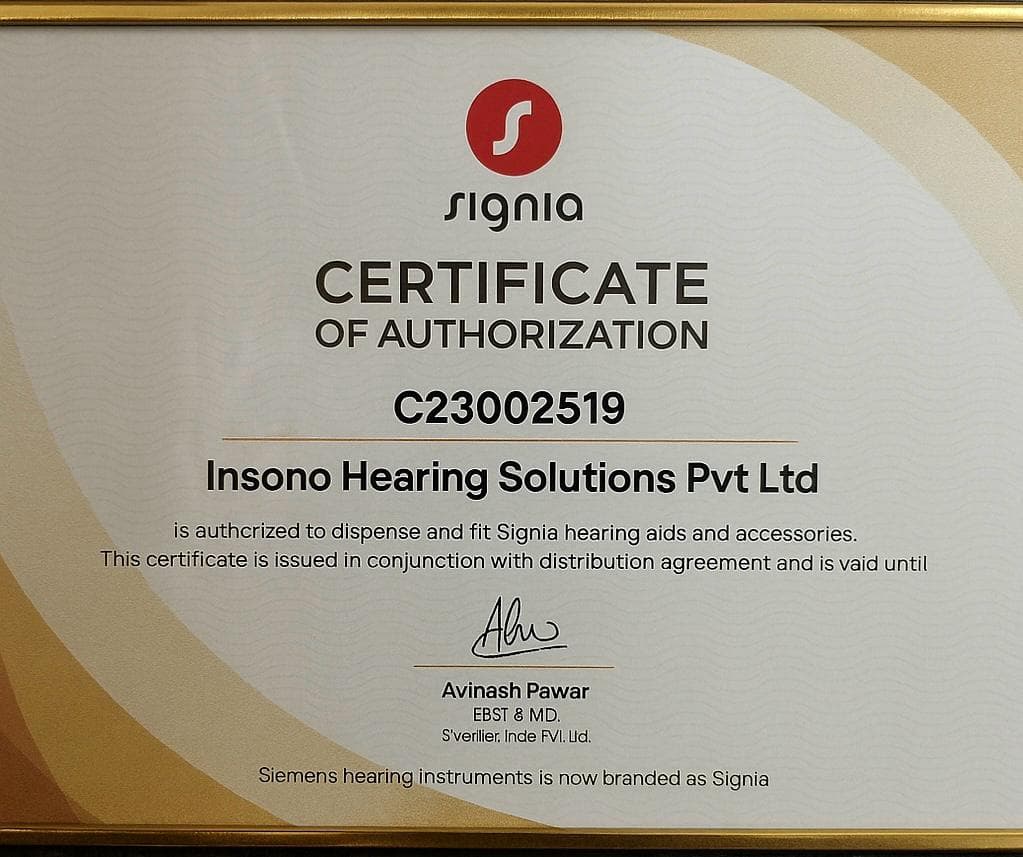
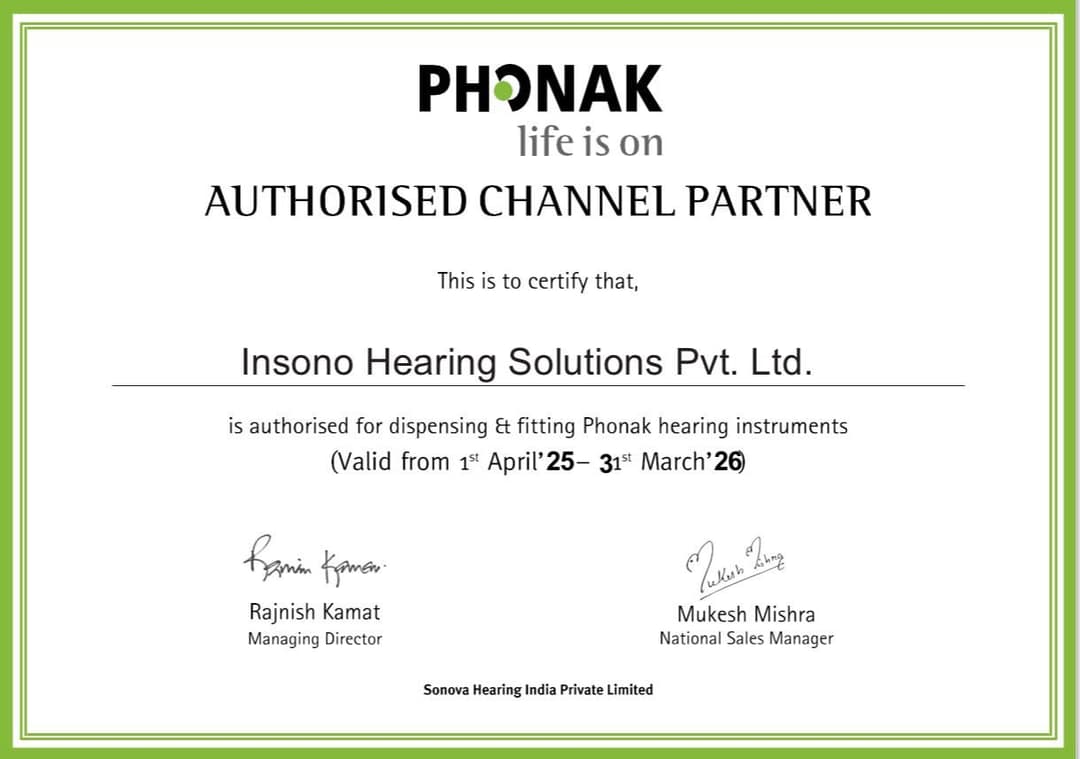
Official Certifications from Widex, Signia & Phonak
Insono Hearing Solutions is an authorized partner for leading global hearing aid brands including Widex, Signia, Phonak, and Oticon. These certifications reflect our trusted expertise and commitment to world-class hearing care in India.
Discover the Different Types of Hearing Aids for Better Hearing
Learn about the latest digital hearing aids, from behind-the-ear (BTE) to completely-in-canal (CIC) devices. Find the right style, features, and comfort level that suit your lifestyle.